
Categories
- Agroforestry
- Apples (Malus x domestic)
- Baneberry (Actaea)
- Bearberry (Arctostaphylos)
- Berry Harvesting
- Berry Identification
- Berry Types
- Blackberries (not crowberries)
- Blueberries (Vaccinium)
- Bog Cranberry (Vaccinium oxycoccos)
- Bunchberry (Cornus canadensis)
- Businesses
- Chokeberry (Aronia)
- Cloudberries (Rubus chamaemorus)
- Cold hardiness
- Commandra, Geocaulon lividum
- Crowberry (Empetrum nigrum)
- Currants (Ribes)
- Devil's Club (Oplopanax horridum)
- Diseases
- Dyes from Berries
- Ecology
- Edible Landscaping
- Elderberry (Sambucus)
- Ethnobotany
- Folklore
- Foraging
- Garden Farm Culture
- Genetics, Breeding, Gene Banks
- Gooseberries (Ribes)
- Greenhouse Cultivation
- Hardy Kiwi (Actinidia)
- Health
- High Tunnels
- Highbush cranberry (Viburnum)
- Honey
- Honeyberry, Haskap (Loniera)
- Huckleberries
- Insect Pests
- Invasive Species
- IPM
- Irrigation
- Juniper (Juniperus)
- Lingonberry, Lowbush cranberry, (Vaccinium vitis-idaea)
- Malus (Malus fusca)
- Mountain Ash (Sorbus)
- Mycorrhizal Fungi
- Nagoonberry (Rubus arcticus)
- Pests- animal, bird
- Physiology
- Poisonous Berries
- Pollination, Pollinators
- Propagation
- Raspberries (Rubus idaeus)
- Recipes
- Rose Hips (Rosa sp.)
- Salmonberry (Rubus spectabilis)
- Saskatoon (Amelanchier alnifolia
- Sea Buckthorn (Hippophae)
- Silverberry (Elaeagnus commutata)
- Skin Care
- Soapberry (Shepherdia canadensis)
- Soils and Plant Nutrition
- Sources of Information
- Strawberries (Fragaria)
- Teas
- Trailing raspberry, Rubus pedatus
- Uncategorized
- Watermelon Berry (Streptopus amplexifolius)
- Weather
- Weeds
- Wild harvesting
- Wild Stand Management
- Wildlife
- Wine, Liqueur
Blogroll
- (Sohal et al 2023)
- Alaska Berries
- Alaska Wildflowers, Berries and Butterflies
- All About Diptera
- Arctic Berries
- Butterflies and Moths of North America
- Fairbanks Interior Foragers
- Growing Produce – Berries
- International Black Currant Association
- International Wild Huckleberry Association
- Northern Bushcraft
- NRCS Webinars
- Pick Your Own Alaska
- Plants Database- NRCS
- Sitka Local Foods Network
- Sohal et al 2023
- The Fruit Blog
- UA Museum of the North Videos
- Univ. Saskatchewan Fruit Program
- US Forest Service Database- more than just fires
- Wild Blueberry Information Network Centre
- Yukon Berries Blog
Archives
- December 2023
- September 2021
- November 2020
- March 2020
- November 2019
- October 2019
- June 2019
- October 2018
- June 2018
- March 2018
- February 2018
- January 2018
- November 2017
- October 2017
- September 2017
- August 2017
- July 2017
- June 2017
- April 2017
- March 2017
- November 2016
- October 2016
- September 2016
- July 2016
- June 2016
- May 2016
- April 2016
- March 2016
- February 2016
- December 2015
- November 2015
- October 2015
- September 2015
- August 2015
Recent Comments
-
Join 171 other subscribers
Category Archives: Lingonberry, Lowbush cranberry, (Vaccinium vitis-idaea)
A Forestry Experiment
Cranberries lost and found. When I was younger the area where I grew up used to be full of spots to pick lowbush cranberries (lingonberries). My family and I did not even have to go far. We could just ride our bikes down some local back roads and the berries would be growing all around; next to the roads and along the edges of the woods. There were some very nice spots deeper into the woods where the poplar and quaking aspen trees grew. The woods were not dense and the forest floor had many sunny and shady spots; the berries grew in abundance. But all this abruptly changed about four years ago on the evening of Sept. 15th 2012, an immense wind storm began to blow. The storm lasted for a few days after but the night of the 15th was of a certainty the worse any of us had ever seen. The winds were so strong that some of the blasts were rated as being hurricane force though no rain accompanied them. When it was all said and done nearly 500 acres of trees in the surrounding forests and valleys had been blown over. Because of the shallowness of their root systems when trees fell their wide root systems pulled great hunks of the forest floor with them. Many of our usually berry patches were literally ripped up by their roots and still many more were buried by fallen trees and branches. Our trails became essentially impassible, and the aspect of the forest changed so much that once familiar landscapes had become a shocking picture of nature’s destructive force.
This event attracted the notice of the local forestry division and they began to look more closely at our area. One forester in particular had a burden to make our area a safer residential zone; he felt that the thickness of the forests near our roads and near our houses was an extreme fire danger. In the summer of 2014 forestry sent a large crew to our area and they began to clear the trees near all the roads. We thought that this would be a relatively small project. A continuation of the cleanup projects that they had been helping us and the others in the area with because of the Great Storm. Time past and the tree lines along the roads moved back from 10ft to 20ft and more; then forestry decided more clearings deeper into the forests needed to be created as LZs for supplies and crews if a fire did occur. They did much cutting with chainsaws which was not very damaging, but this took too long so they brought a great drum with metal ribs on its outsides and filled with water. This giant cylinder was pulled behind a big piece of equipment and reduced acres of forest to great openings filled with ripped up vegetation and crushed timbers. Needless to say any and all berries in these areas have been completely eradicated. I and others in the valley have found other patches deeper into the forests and so all is not lost, but I do wish that in their quest to make us all safer forestry had not been so completely successful in removing all burnable substances for miles around. This project is still ongoing even this summer a crew was working behind our homes deeper into the forest cutting more and burning great piles of brush.
I understand the need for safety but I do hope that one day the berry patches will come back. A few of the men in our neighborhood, who own and run a logging and milling business, say that given time the torn landscapes most likely will grow up into deciduous forests. They hope that the increased sunlight and nutrients will begin to bring long dormant seeds to life. I see this being a good thing as in the past the best patches I found were under the canopies of deciduous trees. I have put in a few interesting links about lingonberries and the likely hood of whether the old patches I used to know will ever return. I have looked for info on the particular method of tree removal that I mentioned, but apparently it was an experiment forestry was trying. Their hope was that the deciduous trees would come back and are keeping an eye in this area to see how fast the forest takes to regrow including the underlying groundcover such as berry bushes. Because it is a new method I could not find much info about it I guess only time will tell. I will continue to watch the patches of cleared land to see how fast.the vegetation takes to come back. The following links are simply interesting research articles on Lingonberries and Alaskan berries that are important to Alaskan communities in general. AB Delta Junction
Websites:
By Richard G. St Pierre, Ph.D. 2016
Accessed Sept. 19,
By Various researchers: Michael Brubaker, Jerry Hupp, Kira Wilkinson, Jennifer Williamson.
Accessed Sept. 20, 2016
Cranberry bread
f you couldn’t tell by now, I love baking as an outlet for my PTSD, so I will likely be sharing a lot of recipes that I enjoy using. One of my coworkers loves, and I mean, LOVES cranberry bread. In my search for good bread recipes, I found this little gem! I have made this several times for her, adding about 1tsp of vanilla extract, and about ¾ cup of chopped walnuts. She seems to love it, and my family does as well!
Spray, Ocean. n.d. Classic cranberry nut bread. Available online: http://www.oceanspray.com/Recipes/Corporate/Breads-Muffins/Classic-Cranberry-Nut-Bread.aspx. Accessed September 14, 2016.
Swedish lingonberries with meatballs
Being Swedish, meatballs and jam are almost as important as pickled herring in my family. I found this good recipe for Swedish Meatballs and Lingonberry sauce that is very similar to the one my grandmother brought with her from Stockholm when she moved to the United States. Granted, this recipe uses pre-made lingonberry jam, I would imagine that it would be even better with fresh-made jam! Here’s the link to the recipe, with instructions! Enjoy! CA Arizona
Florence, Tyler. n.d. Swedish meatballs with lingonberry sauce. Available online: http://www.foodnetwork.com/recipes/tyler-florence/swedish-meatballs-with-lingonberry-sauce-recipe.html. Accessed September 14, 2016.
Phenology of Cloudberries and Lingonberries in Labrador
Here is a link to an article by Canadian Researchers who are interested in following the growth, flowering and fruiting of two of the most important wild berries, cloudberry and lingonberry. They followed phenological sequences of flowering and fruiting and documented potential pollinators in their region. It is interesting to compare their cycles with Alaska. It was published in:
Canadian. Journal. of Plant Science. 96: 329–338 (2016)
Cloudberry and Lingon phenology
Abstract: Plant habitat, growth, fruit yield and occurrence of pollinators in cloudberry and lingonberry fields/bogs were monitored and analyzed at three locations in southern Labrador: Lanse’au Clair (51°41’ N, 57°08’ W), Red Bay (51°43’ N, 56°26’ W), and Cartwright (53°42’ N, 57°0’ W) over the two growing seasons, 2011 and 2012. The length of the growing seasons was 100–120 d (DFRA 2014) with 600–700 growing degree days (GDD) (AAFC 2014). The 2012 season was warmer than 2011. The plants recorded in belt transects belong to six families: Rosaceae, Ericaceae, Pottiaceae, Juncaeae, Equisetaceae, and Sphagnaceae. In the Ericaeae family, Vaccinium vitis-idaea, Arctostaphylos alpina, Empetrum nigrum, and Vaccinium angustifolium were found. In both seasons, the cloudberry was the first to bloom, followed by wild blueberry, lingonberry, and Labrador tea. The fruit yields of cloudberry and partridgeberry in southern Labrador were higher than those recorded in Finland, Norway, and in the USA. Pollinators were present in large numbers. Most of the specimens were from three orders: Hymenoptera, Diptera, and Lepidoptera. Temperature, precipitation, wind, and sunlight affected plant growth and the occurrence of pollinators. To our knowledge this is the most comprehensive study of plant growth, yield, and pollinators’ activity in cloudberry/partridgeberry fields conducted in Southern Labrador, Canada.
Drying lingonberries
Apparently pretreating lingonberries before drying them cracks the skins and helps the drying process. I was putting them directly in the dehydrator and wondering why they were taking so long to dry. Then after several days they were almost powdery. I am going to try this method next year and see if it works better. In addition to the drying tips there are a number of good guidelines here for storing your lingonberry harvest. Planning on printing this out because lingonberries are my favorite! Drying lingonberries
Weeds and Berry Pollination
This week, I listened to a brief 2012 KYUK radio piece on the threat of invasive white sweetclover (Melilotis alba) to Y-K Delta berry patches. It was suggested that the weed, which at publishing had yet to be noticed off the road system, had the potential to invade wild blueberry and cranberry stands in the Interior and lure pollinators away. If blueberries and cranberries received less pollinator visitation or the incorrect pollen, fruit set could be affected.
Research conducted by UAF on 20 test plots near the Steese, Elliot and Dalton Highways found that flowering sweetclover actually encouraged pollinator visitation to berries. Cranberries and blueberries saw at least 3 times the pollinator activity they normally would and cranberries actually had improved fruit set when flowering sweetclover was present. However, researchers couldn’t quite link the results solely to the sweetclover.
Another study was done in a more controlled setting (sweetclover was introduced to test plots around UAF):
“During a rainy June in the first year, conditions seemed to draw pollinators away from native berry plants that were a moderate distance away. During a sunny June in 2012, conditions were good enough that all the plants seemed to benefit.”
More research is necessary, but it was suggested that certain geographic areas might be more susceptible to sweetclover competition (especially those where the sweetclover and berries have highly overlapping flowering periods). Competition for space, however, might be the real issue for native berries:
“Mulder said white sweetclover towers over berry plants and adds nitrogen to the soil, which are factors that could cause it to slowly crowd native plants out of their turf.”
Dried Lingonberries
I found this on the internet while looking for information about dried lingonberries. I was interested because I have tried to dry lingonberries but they came out very crunchy and powdery (which I know after watching the screencast is normal without added oil and sugar to make them chewy). I found this Finnish product and it came with some information about lingonberries and a short video on picking lingonberries. Dried Lingonberries
Carotenoids in Berries
The ripened color of the cloudberry made me curious as the carotenoid content of the berry. I found this research paper that compared carotenoid levels of 4 northern berries. The cloudberry (Rubus chamaemorus), blueberry (Vaccinium myrtillus), cranberry (Oxycoccus palustris) and cowberry (Vaccinium vitis-idaea) were compared in this study. Carotene
Finnish Lingonberry Dessert: Vispipuuro
I decided to share another recipe! Here’s a dessert made from whipped semolina pudding and lingonberries, or vispipuuro. This is one of the finnish traditional desserts, something my mom cooks often, so it really reminds me of my childhood.
Ingredients for vispipuuro:
3 cups of water
1.7 cups of lingonberries (red currants are also a great choice)
0.2 cups of sugar
1/4 teaspoon of salt
0.5 cups of semolina
Put the water and the berries to a pot and bring to boil for 5-15 minutes. Add sugar and salt. Add the semolina while stirring and cook it for 5-10 minutes, stir a little. Then let it cool down. Use a mixer to whip it till it is nice and fluffy, pink pudding. Serve with cold milk. Enjoy! S. Heikkinen.
Swedish Lingonberries
I found this great website on lingonberries, and especially the importance of lingonberries in Swedish culture. I found it interesting that you can buy frozen lingonberries all year round in Sweden. Swedish Lingonberries
Arctic Berry Harvesting- Churchill, Canada
This site lists the common berries found in and around Churchill,Canada and great information about the berries, photos, and personal harvesting reports, as well as tidbits about wildlife and birds in the area. Churchill, Canada Berries. It includes kinnikinnick, wild blueberries, bunchberries, cloudberries, bog cranberries, crowberries, gooseberries, raspberries, lingonberries and highbush cranberries.
Vattlingon or “Water lingonberries”
“Vattlingon” is a very simple method for preservation of lingonberries – simply fill a jar with washed lingonberries, then poor clean water over the berries and store them for several months in the fridge or cellar. According to Hank Shaw of Honest-food.net: “The effect is to mellow the extreme tartness and tannins in fresh cranberries, leaving them pleasantly acidic and slightly sweet.” Naturally occuring benzoic acid in the lingonberries is a preservative that allows one to store in this manner without adding salt or other preservatives to the mix. How do you get clean water? Simply boil your tap water then allow it to cool before pouring over the berries.
How will you use the lingonberries after they have been stored? A traditional use is to serve a small dish (think shot-glass size) of vattlingon as dessert during the Christmas season. Whipped cream and sugar can be added if it is available, but is not always necessary because the water presercation has mellowed the acidity and added a slight sweetness. Another important use is to consume the liquid in the jar. Or you can get more creative and incorporate vattlingon into main courses, such as these recipes for spring salmon and grouse with rosemary and cranberries.
Comments Off on Vattlingon or “Water lingonberries”
Posted in Lingonberry, Lowbush cranberry, (Vaccinium vitis-idaea), Recipes
Low-Bush Cranberries in the Interior
What an abundant plant this summer! I foraged a lot of cranberries this summer, and struggled a bit with how to eat them.
(They are quite bitter)
I ended up making a cranberry jam/sauce mixed with sugar, onion, and pepper. Strange combination that is actually very tasty on almost anything!
Wild cranberries can be hard to really find a good, and enjoyable use for, but when mixed with enough ingredients can be good.
Need less to say, cranberries are also very accessible in this area and we should become accustomed to eating the native plants, since it is the most sustainable way of eating.
Comments Off on Low-Bush Cranberries in the Interior
Posted in Lingonberry, Lowbush cranberry, (Vaccinium vitis-idaea)
Salad Spinner Lingonberry Cleaner
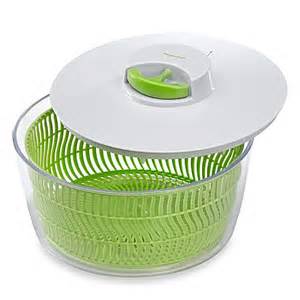
I wanted to share a quick and easy method that I use to sort leaves, dirt, and stems from my lingonberries (and it could be used for a variety of berries). I collected a few gallons of lingonberries this fall and didn’t really want to sort them by hand. I used a plastic insert from a salad spinner. It has slits that are lengthwise instead of holes like a colander. The slits catch the leaves and it is easy to shake the debris off the berries. Here is a similar one to what I used:
Recipes from Russia!
thought it might be interesting to add some Russian recipes to the blog: Russian Recipes