Category Archives: Berry Types

Taste testing Finnish Honey

This is an interesting research paper from the University of Turku, Finland, the Finnish Beekeepers Association and the Tallin University, Estonia. The researchers conducted sensory taste testing and completed chemical profiles of several Finnish honeys (buckwheat, cloudberry, lingonberry, white sweet clover, willow herb (fireweed) and mixed flower honeys (composed of flowering mustards, clover and raspberry, and a member of the genus, Vaccinium). They found a total of 73 compounds that contribute to the aroma of the honeys. They also tested flavor, smell, color and texture with a panel of 62 people. Buckwheat honey was described as malty with a cheese- and fecal-like and cow- and barn-like aroma. Some called it “earthy”! They found that cloudberry honey had the highest level of aromatic compounds of those tested. It was described as pungent, solvent-like, herbal and citrus-like. Lingonberry honey was described as pleasant and sweet with notes of vanilla and caramel. The others were rated well because they were most familiar to the panelists and their pleasant aromas. The honey samples that rated poorly because of strong, unfamiliar odor, flavor and aftertaste as well as dark color were buckwheat and cloudberry! Both were strongly negative in consumer appeal.

I have eaten buckwheat honey, and it is as strong and “earthy” as described, more like a molasses rather than honey, but still good especially for baking. To lump cloudberry in the category is amazing! I have never seen a beekeeper sell cloudberry honey – not enough flowers in one location, I suspect, but it doesn’t sound like anything I would invest in! Lingonberries and fireweed – yes!

Kortesniemi, M., Rosenvald, S., Laaksonen, O., Vanag, A., Ollikka, T., Vene, K., Yang, B., Sensory and chemical profiles of Finnish honeys of different botanical origins and consumer preferences, Food Chemistry (2017), doi: Honey article
 

More anti microbial activity in lingonberries

This study explored the antimicrobial activity of the antioxidant phenolic compounds in lingonberry juice and two other fruits in spoiled fruit juice. They studied Asaia lannensis and  Asaia bogorensis, two well known bacteria that are a significant contributor to the degradation of non-alcoholic fruit juices. These bacteria create biofilms  that cause turbidity and adhesion of the juice on surfaces holding the juice. These biofilms, in turn, can cause illness in susceptible individuals. The bacteria are also becoming resistant to a lot of the chemical preservatives used now in juices. The authors found that lingonberry juice added to the product shows a 67% reduction in adhesions from the bacteria. We all knew lingonberries were great. The evidence keeps mounting!

Wild Fruits as Antiadhesive Agents Against the Beverage-Spoiling Bacteria Asaia spp.

Hubert Antolak,  Agata Czyzowska  , Marijana Saka , Aleksandra Mišan , Olivera  uragi´c and Dorotea Kregiel Institute of Fermentation Technology and Microbiology, Lodz University of Technology, Wolczanska 171/173, 90-924 Lodz, Poland; agata.czyzowska@p.lodz.pl (A.C.); and Institute of Food Technology Novi Sad, Bulevar cara Lazara 1, 21000 Novi Sad, Serbia;

Abstract: The aim of the study was to evaluate antioxidant activity and total phenolic content of juice from three different types of fruits: elderberry (Sambucus nigra), lingonberry (Vaccinium vitis-idaea) and cornelian cherry (Cornus mas), and their action against adhesion of bacterial strains of Asaia lannensis and Asaia bogorensis isolated from spoiled soft drinks. The antioxidant profiles were determined by total antioxidant capacity (2,2-diphenyl-1-picrylhydrazyl, DPPH), and ferric-reducing antioxidant power (FRAP). Additionally, total polyphenol content (TPC) was investigated. Chemical compositions of juices were tested using the chromatographic techniques: high-performance liquid chromatography (HPLC) and liquid chromatography–mass spectrometry (LC-MS). Adhesion properties of Asaia spp. cells to various abiotic materials were evaluated by luminometry, plate count and fluorescence microscopy. Antioxidant activity of fruit juices expressed as inhibitory concentration (IC50) ranged from 0.042 0.001 (cornelian cherry) to 0.021 0.001 g/mL (elderberry). TPC ranged from 8.02 0.027 (elderberry) to 2.33 0.013 mg/mL (cornelian cherry). Cyanidin-3-sambubioside-5-glucoside, cyanidin-3-glucoside, and cyanidin-3-sambubioside were detected as the major anthocyanins and caffeic, cinnamic, gallic, protocatechuic, and p-coumaric acids as the major phenolic acids. A significant linear correlation was noted between TPC and antioxidant capacity. In the presence of fruit juices a significant decrease of bacterial adhesion from 74% (elderberry) to 67% (lingonberry) was observed. The high phenolic content indicated that these content indicated that these compounds may contribute to the reduction of Asaia  spp. adhesion.

2017 VVI

Healthy sausages?

I first read the title to this article and wondered if this wasn’t a joke – trying to make sausages healthy by adding sea buckthorn juice. Sounded pretty extraordinary to me. But then I read past the abstract and learned that the researchers are trying to find alternatives to chemical additives to sausages. In other words, they were trying to find a natural alternative to artificial additives to their product. In this case addition of 1.5% sea buckthorn juice increased the shelf life, reduced lipid oxidation and improved the microbial quality of the meat product. Its an interesting look at the complexities of food science.

2017 Hippophae

Anna Marietta Salejda,1 Agnieszka Nawirska-OlszaNska,Urszula Janiewicz,1 and Grahyna Krasnowska Department of Animal Products Technology and Quality Management,Wrocław University of Environmental and Life Sciences,ChełmoÅLnskiego Str., 51-630Wroclaw, Poland and Department of Fruit, Vegetable and Nutraceutical Technology,Wrocław University of Environmental and Life Sciences, ChełmoÅLnskiego Str., 51-630Wroclaw, Poland


The present study was aimed at evaluating the effect of a sea buckthorn (Hippophae rhamnoides L.) fruit extract on selected quality properties of cooked sausages.The ethanolic extract of sea buckthorn fruit (SBE) incorporated at the highest level (3%) significantly affected the pH, weight losses, and instrumental color parameters of sausages. The SBE deteriorated organoleptic properties of sausages like juiciness, overall appearance, texture, and taste; however the sausagesmanufactured with 1.5% SBE were scored higher for color and almost the same as control for smell acceptance. Textural parameters like hardness, springiness, gumminess, and chewiness of cooked sausages decreased along with SBE addition. After 28 days of storage, the samples with 1.5% SBE addition were as springy, hard, and gummy as the control ones. Incorporation of SBE increased the shelf life of sausages. The highest inhibition of lipid oxidation was observed in the samples manufactured with 1.5% SBE.The SBE significantly improved the microbial qualities of sausages.

Alaska Strawberry History

For anyone interested, here is a short article I wrote a few years ago about the history of strawberry breeding and cultivation in Alaska.      Strawberry history

Strawberry wars

Strawberries have been a passion all over the world for hundreds of years. The story is no different in Alaska where strawberry mania traveled North with the Gold Rush. The attached link is an interesting history of the development of the strawberry with one of the world’s top producers, Driscoll as well as conflicts with public and private breeding interests. It evens mentions Alaska wild strawberries! Driscoll Strawberries conducted some research along with the UAF Georgeson Botanical Garden into strawberry plant production in the 1990s. They were interested in learning if producing the plants at high latitudes would improve yields when the plants were transplanted in southern California and Mexico for fruit production. The results were not positive so they moved on to other ideas. It was interesting working with this private company and learning their research procedures that have since catapulted their patented strawberries into world fame. Anyone who buys strawberries at Safeway or Freddies certainly knows their name. It is also interesting to note that Alaska had the first strawberry breeding program at a U.S. University anywhere! It was begun by Charles Georgeson in the early 1900s. Others certainly have lasted longer, but Alaska was the first! We just can’t seem to get anyone in the State to fund ag research on any level. The Agricultural Experiment Station was THE research and development arm for Alaska farmers, and today it is a shadow of its former self.

The Driscoll Story


Juniperus horizontalis — Yukon Wild Berries

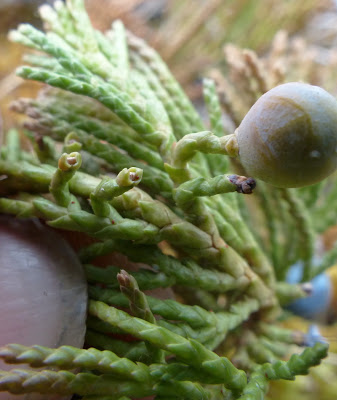
Yes! a few days ago, the male flowers released their pollen and yesterday i finally found, on a different plant (dioecious) a few female flowers with a last year berry ( which is not a true berry) and a two year old ripe, blue, berry on the same branch.April 29, 2017Along the Takhini river, on…

via Juniperus horizontalis — Yukon Wild Berries

Geocaulon lividum — Yukon Wild Berries

the false toadflax is blooming, May 16 2017.This one found at teapot ponds, but it is very common around here, and i saw it coming into bloom the last few days.I call it timberberry,but it’s prettiest name is northern comandra comandra meaning hairy calyx lobes

via Geocaulon lividum — Yukon Wild Berries

Documenting Change in Nunavut

Here is a thesis that explores climate change through berries near Kugluktuk, Nunavut, Canada. The program is part citizen science as well as documenting the ethnobotany of the region. It includes great summaries of the most important berries and even some recipes!

ubc_2017_may_desrosiers_sarah

Improving Haskap Fruit Quality

This thesis reveals an interesting breeding program at the U. of Saskatchewan to improve the quality of Haskap berries and leaves. Their goal is to increase secondary metabolites or compounds that might be beneficial to human health.

DAWSON-DISSERTATION-2017

How to improve cloudberry fields

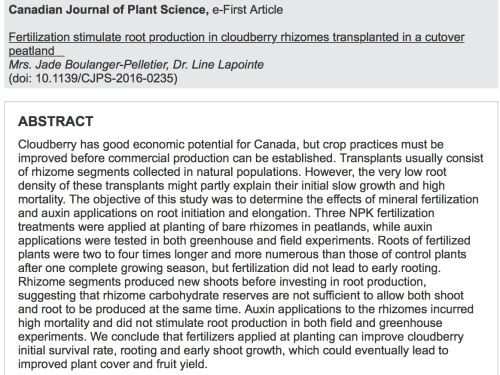
Nice research about increasing abundance of cloudberry plants by increasing fertilizers. Here is the abstract. The full article is available from the Canadian Journal of Plant Science.

Rubus chamaemorus rhizome development


Antimicrobial Activity in Lingonberry

This study from Romania/Hungary showed that lingonberries have a high anti-microbial activity especially relating to Pseudomonas species. The authors found that where you harvest makes a big difference in this anti-microbial activity. When selecting for high activity, the location needs to be considered. It is not known just what in the environment is influencing the activity, but it can be highly variable.

2017 Laslo

Flavonoids in Crowberry, Empetrum nigrum

This is an interesting article on the value of crowberries in the diet. Lots of people harvest this fruit although many people consider it tasteless, nothing more than a thirst quencher if you are out hiking in the woods. They are tiny, and you have your work cut out for you to harvest enough to do anything with, but they are good.

Empetrum nigrum

Black Crowberry (Empetrum nigrum L.) Flavonoids and Their Health Promoting ActivityTunde Jurikova 1, *, Jiri Mlcek 2 , Sona Skrovankova 2 , Stefan Balla 1 , Jiri Sochor 3 , Mojmir Baron 3 and Daniela Sumczynski 2 1 Institute for Teacher Training, Faculty of Central European Studies, Constantine the Philosopher University in Nitra, Drazovska 4, SK-949 74 Nitra, Slovakia; sballa@ukf.sk 2 Department of Food Analysis and Chemistry, Faculty of Technology, Tomas Bata University in Zlin, nam. T. G. Masaryka 5555, CZ-760 01 Zlin, Czech Republic; mlcek@ft.utb.cz (J.M.); skrovankova@ft.utb.cz (S.S.); sumczynski@ft.utb.cz (D.S.) 3 Department of Viticulture and Enology, Faculty of Horticulture, Mendel University in Brno, Valticka 337, CZ-691 44 Lednice, Czech Republic; sochor.jirik@seznam.cz (J.S.); MojmirBaron@seznam.cz (M.B.)  Published: 7 December 2016

Abstract: Nowadays, much research attention is focused on underutilized berry crops due to the high antioxidant activity of fruits. Black crowberry (Empetrum nigrum L.) represents an important source of flavonols (quercetin, rutin, myricetin, naringenin, naringin, morin, and kaempferol) and anthocyanins. The fruit components could be utilised as natural colourants or as a part of functional foods and, because of the high antioxidant activity, the berries of black crowberry can be used in the treatment of diseases accompanied with inflammation, or as an effective antibacterial and antifungal remedy. Moreover, the reduction of lipid accumulation and total cholesterol as well as an improvement of postprandial hyperglycaemia have been proven. This review summarizes for the first time the main antioxidants (flavonoids) of black crowberry fruits, with a focus on their health promoting activity.

Roadside fertilizer?

Several Alaska researchers studied the vegetation along the Dalton Highway in moist-acidic tussock-tundra in 2006. The pH of the roadside that is annually covered in fine dust from the road, increased over time from 4 to 6. . The amount of grasses did, too as well as cloudberry, Rubus chamaemorus. The fine dust may be adding a bit of fertilizer to the roadsides. It is not surprising that grasses increase especially on disturbed sites, but cloudberries are a surprise. I wonder if berry yield also increases or if it is just vegetation.

Roadside vegetation

Cornell Berry Diagnostics

The Cornell Cooperative Extensions Berry Diagnostic Tool is an excellent resource for anyone growing or interested in strawberries, raspberries, blueberries, blackberries, currants, and gooseberries. This online tool allows anyone to select a berry crop and then from a variety of descriptions of plant growth issues, deformities, discolorations, damage, or other indicator that occurs on the whole plant, flower, fruit, or vegetative to continue to diagnose the issue. Lots of photographs and links to in depth articles are included about many diagnoses to really get to the “root” of the issue. Finally, recommendations for management of the issue can be selected after referring to the images and descriptions
Citation: Cornell Cooperative Extension. 2016. Cornell Fruit Berry Diagnostic Tool. Available online: Diagnosis. Accessed: 12 October 201

Fruit Soups

Fruit Soup Recipe

2 cups dry red wine 1 cup water ; 2/3 cup sugar ; 2 whole star anise ; 2 cinnamon sticks; 1 (12-ounce) basket fresh strawberries, hulled, sliced;  1 (6-ounce) basket fresh raspberries;  1 (4.4-ounce) basket fresh blueberries;  1 pint vanilla bean gelato or ice cream

Directions: Combine the wine, water, sugar, star anise, and cinnamon sticks in a heavy large saucepan. Add all but 1/2 cup of each of the berries. Bring the liquids to a simmer over medium-high heat. Reduce the heat to medium-low and simmer gently until the fruit is very tender, about 10 minutes. Cool slightly. Discard the star anise and cinnamon sticks. Transfer the berry mixture to a blender and puree until smooth. Strain the soup through a fine mesh strainer and into a medium bowl. Cover and refrigerate until very cold, stirring occasionally, at least 8 hours and up to 1 day ahead. Cut the reserved strawberries into small pieces. Place a small scoop of vanilla bean gelato or ice cream in the center of 8 decorative dessert glasses or soup bowls. Divide the mixed berry soup among the glasses, being careful to pour around the gelato. Sprinkle the reserved berries over the soup and serve immediately. Thank you to Giada De Laurentiis for a delicious mixed berry soup with gelato recipe. Doing research on berry information is when I learned that people really do make soup from berries. You can heat it up and use it as a topping or throw some whipped cream on it for a cold topping. Sounds delicious!   AK Fairbanks

Bog Blueberries for Health

“Bog Blueberry anthocyanins alleviate photo-aging in UV B irradiation-induced human dermal fibroblasts.”

The fruits of the bog blueberry plant are rich in anthocyanins that contribute pigmentation and the relief/prevention of several chronic diseases. Several studies show bog blueberries remarkably suppress collagen degradation as well as inflammatory response in the skin cells which allow for connective tissue and healing/recovery after injury. The edible berry shows proof it can be protective against skin damage!
Bae, J.-Y., Choi, J.-S., Han, S.J., Ju, S.M., Kang, I.-J., Kang, Y.-H., Kim, S.J., Lim, S.S., Park, J. 2009. “Bog Blueberry Anthocyanins Alleviate Photo-Aging in Ultra-Violet B Irradiation-Induced Human Dermal Fibroblasts.” Molecular Nutrition and Food Research 53(6): 726-738.

Haskap Pie

Pie is one of my absolute favorite desserts and I don’t usually stray far from my favorites apple and cherry, but I found a recipe for haskap pie filling that I would definitely have to try if I ever came across it. I always find that from picking or obtaining the berry yourself, it is always that much more satisfying when you have the finished product!   LF Fairbanks


HASKAP PIE FILLING
Haskap berries have twice as much juice in them as any other berry! We have found that frozen berries works better for pie filling instead of the fresh berry. If you use the fresh berry they tend to continue to leak out juice after baked.

4 cups of frozen Haskap berries
1 ½ cups sugar
4 tbsp. cornstarch
¼ cup of strained juice.

  • Place the frozen berries in a colander to thaw and drain overnight.
    • Save the strained juice. One option is to mix the juice with sparkling water on ice with a sweetener of your choice for a refreshing drink.
  • Place drained berries in a medium saucepan with the sugar
  • Bring to a boil , then turn down to a simmer
  • Add the cornstarch to the 1/4 c of juice
  • Add this slowly to the berry/sugar mixture while it is simmering and stir to thicken
  • Cool when thickened and pour into pre baked pie shell


2013. Haskap Recipes. Available online: Recipes. Accessed 19 Oct, 2016.

Salmonberry uses

Salmon berry plants bark and leaves can be cooked down for tea to treat diarrhea or dysntery. The branches are also used  Pena,D. Salmonberry: Food, Medicine, Culture – Part 1. Available online: Salmonberries.  Accessed 19 Oct, 2016.

Maxine Thompson and her haskaps

This article highlights the life of Maxine Thomson for her contribution to breeding of and popularizing the Haskap.  She seems to be a rather amazing woman and this is a delight and an inspiration to read!
Martin, S. 2016.  Sweet Success.  Available Online: Maxine Accessed 17 Oct 2016.

Blueberry Swirl Cheesecake

Every year around October my church conducts a pie auction fundraiser. While this isn’t exactly a pie, it still sold for over $100, which means you can take the whole thing home! You won’t want to share! This recipe is taken from the Taste of Home Annual Cookbook, 2003 Edition. CM Fairbanks
Blueberry Swirl Cheesecake
1 packaged (12 ounces) frozen blueberries, thawed
1 tablespoon sugar
1 tablespoon water
1-1/2 teaspoons cornstarch
CRUST:
1-1/4 cups graham cracker crumbs
¼ cup sugar
1/3 cup butter or margarine, melted
FILLING:
3 packages (8 ounces each) cream cheese, softened
1 can (14 ounces) sweetened condensed milk
3 eggs
¼ cup lemon juice
In a food processor or blender, process the blueberries, sugar, water and cornstarch until blended. Transfer to a heavy saucepan; bring to a boil. Reduce heat; cook and stir over medium heat for 2 minutes or until thickened. Set aside 6 tablespoons for filling. Refrigerate the remaining sauce for topping. Combine crust ingredients. Press onto the bottom of a greased 9-in. springform pan; set aside. In a mixing bowl, beat the cream cheese and milk until smooth. Add eggs; beat on low just until combined. Add lemon juice; beat just until blended. Pour half of the filling over crust; top with half of the reserved blueberry sauce. Repeat layers. Cut through filling with a knife to swirl blueberry sauce. Place pan on a baking sheet.