Categories
- Agroforestry
- Apples (Malus x domestic)
- Baneberry (Actaea)
- Bearberry (Arctostaphylos)
- Berry Harvesting
- Berry Identification
- Berry Types
- Blackberries (not crowberries)
- Blueberries (Vaccinium)
- Bog Cranberry (Vaccinium oxycoccos)
- Bunchberry (Cornus canadensis)
- Businesses
- Chokeberry (Aronia)
- Cloudberries (Rubus chamaemorus)
- Cold hardiness
- Commandra, Geocaulon lividum
- Crowberry (Empetrum nigrum)
- Currants (Ribes)
- Devil's Club (Oplopanax horridum)
- Diseases
- Dyes from Berries
- Ecology
- Edible Landscaping
- Elderberry (Sambucus)
- Ethnobotany
- Folklore
- Foraging
- Garden Farm Culture
- Genetics, Breeding, Gene Banks
- Gooseberries (Ribes)
- Greenhouse Cultivation
- Hardy Kiwi (Actinidia)
- Health
- High Tunnels
- Highbush cranberry (Viburnum)
- Honey
- Honeyberry, Haskap (Loniera)
- Huckleberries
- Insect Pests
- Invasive Species
- IPM
- Irrigation
- Juniper (Juniperus)
- Lingonberry, Lowbush cranberry, (Vaccinium vitis-idaea)
- Malus (Malus fusca)
- Mountain Ash (Sorbus)
- Mycorrhizal Fungi
- Nagoonberry (Rubus arcticus)
- Pests- animal, bird
- Physiology
- Poisonous Berries
- Pollination, Pollinators
- Propagation
- Raspberries (Rubus idaeus)
- Recipes
- Rose Hips (Rosa sp.)
- Salmonberry (Rubus spectabilis)
- Saskatoon (Amelanchier alnifolia
- Sea Buckthorn (Hippophae)
- Silverberry (Elaeagnus commutata)
- Skin Care
- Soapberry (Shepherdia canadensis)
- Soils and Plant Nutrition
- Sources of Information
- Strawberries (Fragaria)
- Teas
- Trailing raspberry, Rubus pedatus
- Uncategorized
- Watermelon Berry (Streptopus amplexifolius)
- Weather
- Weeds
- Wild harvesting
- Wild Stand Management
- Wildlife
- Wine, Liqueur
Blogroll
- (Sohal et al 2023)
- Alaska Berries
- Alaska Wildflowers, Berries and Butterflies
- All About Diptera
- Arctic Berries
- Butterflies and Moths of North America
- Fairbanks Interior Foragers
- Growing Produce – Berries
- International Black Currant Association
- International Wild Huckleberry Association
- Northern Bushcraft
- NRCS Webinars
- Pick Your Own Alaska
- Plants Database- NRCS
- Sitka Local Foods Network
- Sohal et al 2023
- The Fruit Blog
- UA Museum of the North Videos
- Univ. Saskatchewan Fruit Program
- US Forest Service Database- more than just fires
- Wild Blueberry Information Network Centre
- Yukon Berries Blog
Archives
- December 2023
- September 2021
- November 2020
- March 2020
- November 2019
- October 2019
- June 2019
- October 2018
- June 2018
- March 2018
- February 2018
- January 2018
- November 2017
- October 2017
- September 2017
- August 2017
- July 2017
- June 2017
- April 2017
- March 2017
- November 2016
- October 2016
- September 2016
- July 2016
- June 2016
- May 2016
- April 2016
- March 2016
- February 2016
- December 2015
- November 2015
- October 2015
- September 2015
- August 2015
Recent Comments
-
Join 171 other subscribers
Category Archives: Blueberries (Vaccinium)
Is it a blueberry or huckleberry?
I recently visited Washington state and had the opportunity to go to Mt. Baker and pick huckleberries! ….or were they blueberries? If I were to be placed in this field of wild berries out of context, I would have without hesitation called them blueberries. I might add that our local tour guide and friend referred to them as “huckleberries”. She was born and raised in Montana, which leads to even more interesting facts about huckleberries. I have also lived in Montana and while living there I learned that huckleberries are considered to be very, very special. Any tourist shop will have huckleberry jams, jellies and other treats. Montanans are so proud of this berry that the state has made it a misdemeanor to label a product huckleberry if it contains any other fruit (http://codes.lp.findlaw.com/mtcode/80/11/7). All of this huckleberry/blueberry confusion led to more questioning and searching the internet for the difference between these two common names. I think that we gathered and gorged on Vaccinium delisiosum (Cascade Blueberry or Western Huckleberry), but I am still not positive. Whatever they were they were delisioso!
Here are a few things that I have gleaned from a little searching:
The common name ‘huckleberry’ includes two different genera (with the exception of next bullet), Vaccinium and Gaylussacia, both in the Ericaceace family
According to the USDA Plants Database, there are 14 plants with the common name of ‘huckleberry’ to include not only Gaylussacia (8 species) and Vaccinium (4 species) but also Solanum (spp: melanocerasum and scabrum)
Fruits of Gaylussacia have 10 chambers resulting in 10 large seeds, whereas Vaccinium have 5 chambers and many numerous and smaller seeds
According to the USDA Plants Database, there are 8 species of Gaylussacia, all east of the Rocky Mountains.
Blueberries have been domesticated, while huckleberries have not. Check out the following blogs for more adventures in differentiating these berries: KD Fairbanks
Huckleberries, and Blueberries
.
Barney, Danny. L. 1999. Growing Western Huckleberries. Available online: Huckleberries
USDA Natural Resources Conservation Service. 2016. Plants Database. Available online: Plants Database
Blueberries and Lingonberries in Pie
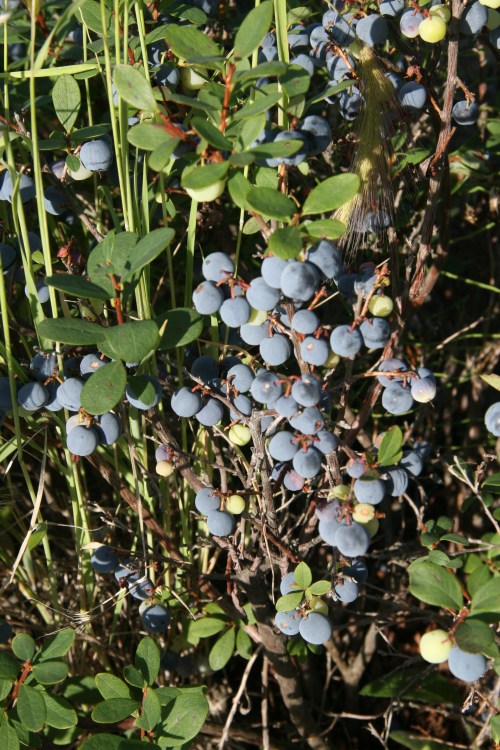
Blueberry Cranberry (lingonberry) Pie, muffins, anything Mixing about half and half of blueberries and cranberry (lingonberry) pie adds a surprisingly tasty zing. It’s also a nice way to use lingonberries in a pie. If you make an all lingonberry pie, it can be a little overwhelming, but half and half is just about right for my taste. As I mentioned earlier in my post on blueberry and raspberries for breakfast, I prefer not to add sugar to my berries which is part of the reason that I have a hard time using lingonberries. Now that I know lingonberries top the charts in antioxidants, I want to try to incorporate them even more into mine and my family’s diet. Of course, extrapolate from pie, and half blueberries and half lingonberries will do in just about any baked good or jam you are making.
Holloway, P.S., R. Dinstel and R. Leiner. 2006. Antioxidants in Alaska Wild berries. Georgeson Botanical Notes No. 35. Available Online: Berries and Antioxidants
Blueberry Wine
This is an article about the uses of mainly Blueberries and their uses in the process of winemaking. The author, tells the story of John Tamburello, and how he got his start in winemaking as well as some of the berry conditions that influence the taste of the wine such as rainfall, size and insect populations. At the end he even goes over the various flavorings of the wines. Overall a very informative and inspiring read for those who wish to learn about winemaking.
Chiasson, B. 2016. Blue wine and berries. Available online: winemaking Accessed 21 Sep, 2016.
Posted in Blueberries (Vaccinium), Recipes
A lesson learned – Blueberry Pancakes +
A Lesson Learned
As the great Alaskan holiday known as hunting season continues, the stories of the ones that got away and the exciting trips we’ve taken often get told at my dining room table over dinner. One of my favorite stories occurred on my first ever hunting trip when I was eight years old.
There was a large group of family and friends all together camping out on the banks of the Salchaket Slough just outside of Fairbanks. In the early mornings everyone would get up and head out to find the moose. By midmorning most of us would be back at camp, ready to make breakfast. On this particular morning we were having blueberry pancakes, made with freshly picked blueberries that bored me had foraged for instead of looking for moose. The camp stove was heated up and the pancake mix measured and stirred. The blueberries came next. My third grade self was ecstatic that the batter turned purple, a rookie mistake. I kept stirring with renewed vigor and in my excitement I dropped the spoon on the ground. A family friend retrieved it, the batter covered in dirt. I was upset, now we would have to find another spoon or rinse that one off. My friend winked at me and put the spoon back into the bowl, mixing it once again, dirt and all. That’s when I learned one of the most important lessons of my life, “A little dirt won’t hurt.” Those are still the best pancakes I think I’ve ever had.
Blueberries still hold a special place in my heart. Every year that I’ve gone out hunting I’m always sure to pick the last berries still holding on as an ode to those pancakes several years ago. Harvesting moose this year? Nope, I’m harvesting berries. CM Fairbanks
Posted in Blueberries (Vaccinium)
Blueberries and Pasta
I have never actually tried a berry recipe, I have always just made jelly, pies, or pancakes out of the berries that I harvested so finding a pasta recipe with blueberries was really interesting and I thought I would share it with you.
Eatingwell.com Chicken and Blueberry Pasta Salad
Original recipe yields 4 servings
The Ingredients-
1 pound boneless, skinless chicken breast, trimmed of fat
- 8 ounces whole-wheat fusilli or radiatore
- 3 tablespoons extra-virgin olive oil
- 1 large shallot, thinly sliced
- 1/3 cup reduced-sodium chicken broth
- 1/3 cup crumbled feta cheese
- 3 tablespoons lime juice
- 1 cup fresh blueberries
- 1 tablespoon chopped fresh thyme
- 1 teaspoon freshly grated lime zest
- 1/4 teaspoon salt
Preparation
- Place chicken in a skillet or saucepan and add enough water to cover; bring to a boil. Cover, reduce heat to low and simmer gently until cooked through and no longer pink in the middle, 10 to 12 minutes. Transfer the chicken to a cutting board to cool. Shred into bite-size strips.
- Bring a large pot of water to a boil. Cook pasta until just tender, about 9 minutes or according to package directions. Drain. Place in a large bowl.
- Meanwhile, place oil and shallot in a small skillet and cook over medium-low heat, stirring occasionally, until softened and just beginning to brown, 2 to 5 minutes. Add broth, feta and lime juice and cook, stirring occasionally, until the feta begins to melt, 1 to 2 minutes.
- Add the chicken to the bowl with the pasta. Add the dressing, blueberries, thyme, lime zest and salt and toss until combined.
- Make Ahead Tip: Add everything except the blueberries and dressing to the pasta salad. Cover and refrigerate pasta salad, blueberries and dressing separately for up to 1 day. Toss together just before serving.
Nutrition information
- Serving size: about 1 1/2 cups
- Per serving: 320 calories; 11 g fat(3 g sat); 5 g fiber; 34 g carbohydrates; 23 g protein; 29 mcg folate; 49 mg cholesterol; 5 g sugars; 0 g added sugars; 82 IU vitamin A; 6 mg vitamin C; 68 mg calcium; 2 mg iron; 244 mg sodium; 254 mg potassium
- Nutrition Bonus: Magnesium (18% daily value)
- Carbohydrate Servings: 2
- Exchanges: 2 starch, 2 lean meat, 1 fat
Looking at the site more in depth, I found that it has alot of healthy choices as well as treats. I look forward to trying some of these recipies out in the near future.
http://www.eatingwell.com/recipe/251887/chicken-blueberry-pasta-salad/
Posted in Blueberries (Vaccinium), Recipes
Inoculating blueberries with mycorrhizal fungi
Journal Article: Inoculation with Ericoid Mycorrhizal Fungi Alters Fertilizer Use of Highbush Blueberry Cultivars.
Citation: Scagel, Carolyn, F. 2005. Inoculation with Ericoid Mycorrhizal Fungi Alters Fertilizer Use of Highbush Blueberry Cultivars. HortScience 40(3):786-794.
Available online: http://horticulture.oregonstate.edu/system/files/Scagel2005BlueberryHortScience.pdf
Accessed: 13 September 2016
Comments: An interesting article about mycorrhizal fungi and several blueberry cultivars container grown, in a nursery. It appears more work needs to be done to better understand the relationships between the fungi and blueberry cultivars.
Lemons and blueberries!
Recipe: Lemon Blueberry Cake with Cream Cheese Frosting by Cooking Classy.
Citation:
Jaclyn. 2014. Lemon Blueberry Cake. Available online: http://www.cookingclassy.com/2014/05/lemon-blueberry-cake/.
Accessed 2 September, 2016.
Comments: I made this cake last week with fresh blueberries and it was delicious. Many friends who tried it, have asked for this recipe. CZ Anchorage
Posted in Blueberries (Vaccinium), Recipes
To use berry pickers or not
Berry Picker: Good or Bad?
One of the three ways to enjoy berries, as mentioned in screen cast 1, is wild berry picking. I am born and raised in Alaska and berry picking is apart of my culture, living off the land is how I grew up. One thing that came up in the screen cast was a berry picker, a device used for easier berry picking. Something that has come up a lot recently is the topic of why they should not be used. Elders in the Alaska Native community are saying that it takes away from the plant and pulls off the leaves, making for an unsuccessful berry season the next year. I wanted to bring this topic up and see what others thought and ask the experts! I would be very interested in finding out more about this, seeing as how blueberries are actually a large part of my life! LF Fairbanks
Berry Picking with Kids
Growing up in Alaska has resulted in a life long love of eating fresh blueberries right off the bush. When I was young my mother and aunt would always take all the girls out berry picking for the weekend. Sometimes we would set up camp other times just day trips, each day filled with my cousins and I eating more berries than what made it into our buckets. We would hike out to my aunt’s most “secret” berry patches and spend hours picking berries and enjoying the serenity that comes with it. After we’d get home we’d spend more time cleaning out extra leaves and stems, rinsing and storing the berries for the winter, mostly just freezing them for fresh blueberry shakes.
Now I am the mother who is getting to enjoy the hours of berry picking while listening to my two little ones munching away instead of filling their buckets. There’s almost nothing more enjoyable than a weekend near my favorite creek picking and eating fresh blueberries. We will eat fresh berries with burnt marshmallows for a camp dessert, fresh chilled blues with eggs and bacon for breakfast and grilled steaks smothered in mashed berries. When we come home my daughter who is four is always excited to help clean and organize the berries for storage and she’s already learning how to make fresh blueberry pie. Teaching my children how to identify blueberries and harvest them without destroying the plants has been extremely rewarding not only in extra picking hands, but because they are always so excited about finding berries, returning to old berry patches and of course, how purple their mouths turn after a day of eating fresh blueberries.
My son’s favorite blueberry recipe other than simply eating them fresh has got to be the shakes I grew up on as a kid. It seems like he’s always asking for mommy to make shakes and so although super simple, that is the recipe I would like to share, a two year old can’t be wrong…
Alaskan Blueberry Shake:
fill the blender with frozen AK blueberries
pour in milk about 3/4 full
add about a cup of granulated sugar
about a teaspoon of ground cinnamon
and a dash or two of ground nutmeg
blend well and enjoy with a fun curly straw.
As you can tell we don’t exactly measure when we cook, but we mix according to our taste buds. This can be easily tweaked to fit your preferred tastes and to add a little kick try a dash of ground ginger or about a teaspoon of orange zest. LH Fairbanks
Improving wild blueberries
Managing a backyard blueberry patch Although sadly, I’ve moved, for five years I enjoyed a glorious backyard blueberry patch. It was lightly cultivated but I think that cultivation was well worth it in terms of production. I think the low hanging fruit in terms of easy cultivation for my patch was, weed whacking the alders and willows and large trees and pruning the bushes with hedge shears (every other year). Other things that I think would contribute to success and would be easy to do are getting bees. I also had chickens for awhile and they went crazy over the blueberries. They contributed a little of fertilizer, but I usually tried to coral them into the garden so that they wouldn’t eat too many blueberries. I’m curious how some of these more intensive cultivation methods used in Maine for example, would work Yarbororough, 2013). Specifically, how many pounds of bog blueberries could be produced on one acre? But then you’d sacrifice the organic nature of our wild blueberry stands. And also, with so many free blueberries on public lands, would it be worth it? I think it is for the easy methods but not sure about irrigation, fertilization, ect. I find it interesting that they call these wild blueberries in Maine with such intensive cultivation? Yarborough, D. 2013. Production-Improving your wild blueberry yields. Cooperative Extension: Maine Wild Blueberries. The University of Maine, Orono, ME 04469. Revised March 2013.
HR Fairbanks
Blueberry Yogurt, Smoothies, Yum!
Blueberry’s for breakfast–every day!
Almost every single morning, I eat alaskan blueberries, raspberries, with yogurt and/or kefir and home made granola. I’m a little addicted. I figure it’s my daily dose of anti-oxidants. I need about 10 gallons of blueberries to eat this–every morning. I used to mostly bake with blueberries–pies, muffins, ect., which of course are delectable, but what I like about eating blueberries this way is that you’re not also eating a lot of white sugar and flour. And of course they taste just fine without the addition of sugar and whatnot. I do make at least one blueberry pie every year, but by eating some, every day, I get my daily dose of anti-oxidants, as do my kids If I were purely eating these for the antioxidant content though, I would add lingonberries in which have the highest amount of antioxidants according to the ORAC score (Holloway, Dinstel, and Leiner, 2006). But I think I’d need to add in some sugar then which might negate some of the benefits. HR Fairbanks
Breakfast Recipe:
1/4 cup blueberries (slightly defrosted)
1/4 cup raspberries (slightly defrosted)
1 container sigis icelandic yogurt (high in protein)
1 dollop of kefir (mostly for the probiotics)
1/2 cup of granola
Mix together and enjoy.
Smoothie Recipe
Another way I love to eat blueberries is in a smoothie. In a vitamix, mix 1/2 cup of blueberries, 1/2 cup of raspberries, 1 banana, 1/2 cup of full fat yogurt, and maybe 1/4 cup of milk if it’s not blending too well. Frozen berries mean that you don’t need to add any ice to this mixture.
Patricia S. Holloway, P.S., R. Dinstel, & R. Leiner. 2006. Antioxidants in Alaska Wild berries. Georgeson Botanical Garden, Note No. 35.
Posted in Blueberries (Vaccinium), Recipes
Bog blueberries in the Garden

Transplanted bog blueberries, Vaccinium uliginosum, from the wild can be planted in a garden with soils amended with peat moss. Productivity can be incredible once the plants become established. They also root from buried stems, and these can be cut from the mother plant and transplanted into a garden. Stem cuttings and seeds also work.
Blueberries and health
This summary of ongoing research shows some of the health benefits of blueberries from brain health to slowing down the process of graying hair. Interesting tidbits throughout, although they are mostly talking about “lower 48” species of blueberries. (Ours are probably better! Ha!)
Blueberry research for your health
Posted in Blueberries (Vaccinium), Health
The benefits of bear scat!
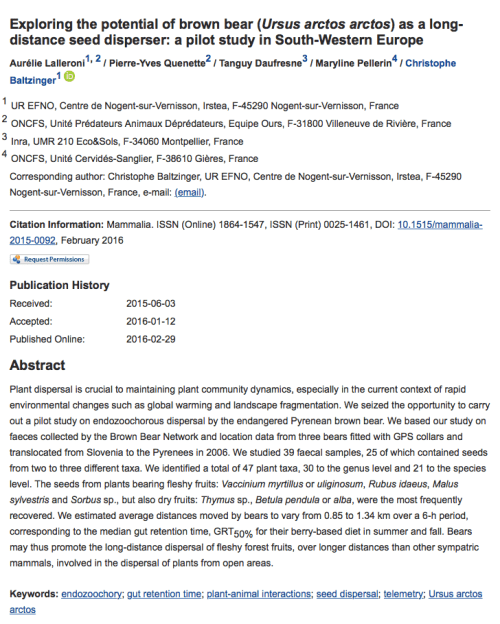
Did you know Pyrenees brown bears travel between 0.5 and 0.8 miles after they have gorged themselves on berries before they have to leave a deposit somewhere? That’s how far bears can transport seeds such as wild blueberry and raspberry from their favorite berry harvesting sites. Now think about it from the plant standpoint. That’s not a bad way to get your genes transported all over the landscape rather quickly!

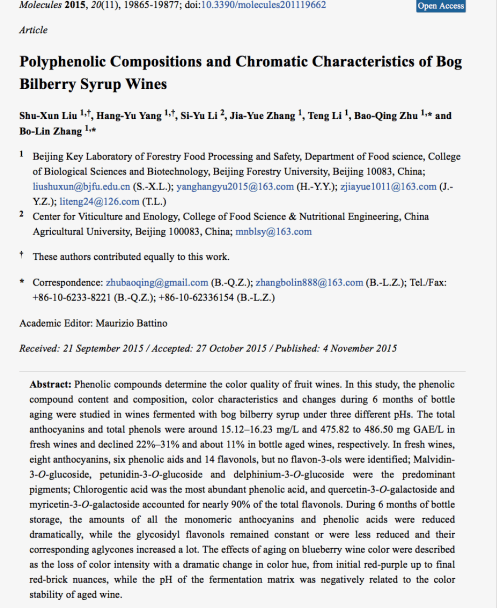
Color and antioxidants in bot blueberry wine
This is an interesting article from China that examines the changes in antioxidants of bog blueberry in winemaking as the wines age.

Posted in Blueberries (Vaccinium), Health, Wine, Liqueur
Weeds and Berry Pollination
This week, I listened to a brief 2012 KYUK radio piece on the threat of invasive white sweetclover (Melilotis alba) to Y-K Delta berry patches. It was suggested that the weed, which at publishing had yet to be noticed off the road system, had the potential to invade wild blueberry and cranberry stands in the Interior and lure pollinators away. If blueberries and cranberries received less pollinator visitation or the incorrect pollen, fruit set could be affected.
Research conducted by UAF on 20 test plots near the Steese, Elliot and Dalton Highways found that flowering sweetclover actually encouraged pollinator visitation to berries. Cranberries and blueberries saw at least 3 times the pollinator activity they normally would and cranberries actually had improved fruit set when flowering sweetclover was present. However, researchers couldn’t quite link the results solely to the sweetclover.
Another study was done in a more controlled setting (sweetclover was introduced to test plots around UAF):
“During a rainy June in the first year, conditions seemed to draw pollinators away from native berry plants that were a moderate distance away. During a sunny June in 2012, conditions were good enough that all the plants seemed to benefit.”
More research is necessary, but it was suggested that certain geographic areas might be more susceptible to sweetclover competition (especially those where the sweetclover and berries have highly overlapping flowering periods). Competition for space, however, might be the real issue for native berries:
“Mulder said white sweetclover towers over berry plants and adds nitrogen to the soil, which are factors that could cause it to slowly crowd native plants out of their turf.”
Bioactivity and Health Considerations
A very well done paper on the bioactivity and health considerations of many o the berries we have studied during this course. (Vaccinium ovalifolium, Vaccinium uliginosum, Rubus spectabilis, Rubus chamaemorus, Empetrum nigrum) I like that they chose 3 different locations in Alaska, but I think they could have done without climate change in the title, for it was almost not even addressed. A good read nonetheless. Antioxidants
Carotenoids in Berries
The ripened color of the cloudberry made me curious as the carotenoid content of the berry. I found this research paper that compared carotenoid levels of 4 northern berries. The cloudberry (Rubus chamaemorus), blueberry (Vaccinium myrtillus), cranberry (Oxycoccus palustris) and cowberry (Vaccinium vitis-idaea) were compared in this study. Carotene
Blueberry Pancakes and Fake blueberries
My favorite way to eat blueberries is in pancakes. Your batter shouldn’t be too sweet: the pancakes are simply a vector for delicious summer blueberries and maple syrup. Also butter. Maybe some cinnamon.
The Huffington Post published an article in 2014 that listed a number of (processed) foods that use the good blueberry name, but contain little to no blueberries. My pancakes might be simple fare, but using real fruit makes all the difference. Sugar, dye and gelling agents constitute the blueberry bits in many foods and while this shouldn’t come as a surprise, one line in the piece sticks with me:
“…if Hostess Mini Muffins can include real blueberries, at least according to the ingredients list, everything else has no excuse.”
Posted in Blueberries (Vaccinium)
Blueberry in sign language
The other class I am taking is an American Sign Language class, so I thought it would be fun to show a video of the sign for “blueberry.” Enjoy.
Posted in Blueberries (Vaccinium)