
Categories
- Agroforestry
- Apples (Malus x domestic)
- Baneberry (Actaea)
- Bearberry (Arctostaphylos)
- Berry Harvesting
- Berry Identification
- Berry Types
- Blackberries (not crowberries)
- Blueberries (Vaccinium)
- Bog Cranberry (Vaccinium oxycoccos)
- Bunchberry (Cornus canadensis)
- Businesses
- Chokeberry (Aronia)
- Cloudberries (Rubus chamaemorus)
- Cold hardiness
- Commandra, Geocaulon lividum
- Crowberry (Empetrum nigrum)
- Currants (Ribes)
- Devil's Club (Oplopanax horridum)
- Diseases
- Dyes from Berries
- Ecology
- Edible Landscaping
- Elderberry (Sambucus)
- Ethnobotany
- Folklore
- Foraging
- Garden Farm Culture
- Genetics, Breeding, Gene Banks
- Gooseberries (Ribes)
- Greenhouse Cultivation
- Hardy Kiwi (Actinidia)
- Health
- High Tunnels
- Highbush cranberry (Viburnum)
- Honey
- Honeyberry, Haskap (Loniera)
- Huckleberries
- Insect Pests
- Invasive Species
- IPM
- Irrigation
- Juniper (Juniperus)
- Lingonberry, Lowbush cranberry, (Vaccinium vitis-idaea)
- Malus (Malus fusca)
- Mountain Ash (Sorbus)
- Mycorrhizal Fungi
- Nagoonberry (Rubus arcticus)
- Pests- animal, bird
- Physiology
- Poisonous Berries
- Pollination, Pollinators
- Propagation
- Raspberries (Rubus idaeus)
- Recipes
- Rose Hips (Rosa sp.)
- Salmonberry (Rubus spectabilis)
- Saskatoon (Amelanchier alnifolia
- Sea Buckthorn (Hippophae)
- Silverberry (Elaeagnus commutata)
- Skin Care
- Soapberry (Shepherdia canadensis)
- Soils and Plant Nutrition
- Sources of Information
- Strawberries (Fragaria)
- Teas
- Trailing raspberry, Rubus pedatus
- Uncategorized
- Watermelon Berry (Streptopus amplexifolius)
- Weather
- Weeds
- Wild harvesting
- Wild Stand Management
- Wildlife
- Wine, Liqueur
Blogroll
- (Sohal et al 2023)
- Alaska Berries
- Alaska Wildflowers, Berries and Butterflies
- All About Diptera
- Arctic Berries
- Butterflies and Moths of North America
- Fairbanks Interior Foragers
- Growing Produce – Berries
- International Black Currant Association
- International Wild Huckleberry Association
- Northern Bushcraft
- NRCS Webinars
- Pick Your Own Alaska
- Plants Database- NRCS
- Sitka Local Foods Network
- Sohal et al 2023
- The Fruit Blog
- UA Museum of the North Videos
- Univ. Saskatchewan Fruit Program
- US Forest Service Database- more than just fires
- Wild Blueberry Information Network Centre
- Yukon Berries Blog
Archives
- December 2023
- September 2021
- November 2020
- March 2020
- November 2019
- October 2019
- June 2019
- October 2018
- June 2018
- March 2018
- February 2018
- January 2018
- November 2017
- October 2017
- September 2017
- August 2017
- July 2017
- June 2017
- April 2017
- March 2017
- November 2016
- October 2016
- September 2016
- July 2016
- June 2016
- May 2016
- April 2016
- March 2016
- February 2016
- December 2015
- November 2015
- October 2015
- September 2015
- August 2015
Recent Comments
-
Join 171 other subscribers
Author Archives: Hortalaska Berries
Propagating my own Raspberries
There are many ways to propagate berries. Some are easier than others but all take some amount of work and continued maintenance, if you want your berries to continue to produce at the level they should. My favorite methods include cuttings, runners, and transplanting. I have the most experience with transplanting because my patch of raspberries was entirely grown in this way. A farm nearby had a very good patch of raspberries and the man who managed our garden many years ago decided he wanted to start a patch for our farm. I learned much from him and he told me how he transplanted the berries and taught me how to care for them.
His first step was traveling to the nearby farm and selecting the best canes, some of which stood fairly apart from the main plant; he pruned them back a bit so they weren’t too much trouble to handle. Experience taught him the best canes to pick for this were second year canes which had already produced and to dig them when the ground became dig-able in the spring before the canes began to bud. Step one he used a pointed shovel and cut the ground around the cane in a circle so that when the cane was pulled up a nice piece of rootball came with it. He then had to transport his nearly 400 plantings for an hour in the back of a big van to our farm. By making sure that all the roots were still covered by plenty of dirt he ensured that they would not dry out too badly on the trip. Some methods for protecting roots for transplanting like this are: put the rootball of the plantings in a damp burlap sack and tie the top so the roots are completely covered. The planting could be put in a bucket of very damp soil till planting (Empress of Dirt) a bucket of damp sand also works for this; if your dirt is not ready yet the transplants could be planted in a container for a growing season and put in the ground later when they become dormant again (northscaping).
The area that was set aside for the raspberries was large; nearly half acre of land that had been tilled and fertilized with old manure. This rich bed had been prepared in advance of his going to collect the transplants. It is best to find a spot for planting and prepare it before digging up the plantings so their roots spend the least amount of time above ground (Empress of Dirt). Holes were then dug about two feet apart. Depending on how much you plan to prune your bushes make sure they are far enough apart so that they don’t immediately crowd each other with new growth. Also create your rows at least 6 feet apart from the edges of the inside bushes. The bushes with quickly grow a lot of vegetation and these walkways will quickly become impassible if the bushes are not pruned often; this I know just by the last 5 years of having to prune said bushes. After the bushes were planted my mentor then put in fence posts every 12 feet or so in a line down the center of each row. He then nailed a cross piece about four feet high on each posts and ran lines of bailing twine along each side of the bushes to hold them upright and later to keep the thick new growth from hanging too far into the walkway. This worked for a few years but did need to be changed periodically as it wore out. Lines of wire or ropes can also work for this (homeguides). Another method of securing canes is trellising; I have not personally tried it but find it interesting and perhaps in the future will use it just to see how it does for me (https://www.youtube.com/watch?v=ghE4XrojNcA) this method is pretty easy to follow.
The raspberries have been growing now for about eight years and are pretty healthy still. I cut them back a lot especially the row length because 270 feet is just too long for a row, 150 seems to work fine. I prune them every fall and also a few times during the growing season if the new growth is getting out of hand. I put down old manure every two years and water them with soaker hose irrigation. One issue I have run into, because of the closeness of the rows is that sunlight does not get down into the bushes the way it should. To fix this I have cut down one entire row and may have to cut more. I think that by staggering the rows with larger walkways more light should reach the inside bushes. In the future I plan to rely more on mulching than mowing and tilling to help keep weeds down. Our local sawmill has an abundance of wood chips so I will probably use that. As of now I have 7 rows of a red variety known as Canby and one row of yellow called Amber. Both have slightly different taste and the reds tend to produce earlier and faster than the yellow but many people like the yellow’s mildly, sweet flavor. I like them both and do everything in my power to make them produce well every summer. AB Delta Junction
Websites:
By Amelia Alloys: How to secure raspberry canes to wires. Accessed Sept. 26, 2016
By James Kohut: 10 tips for minimizing transplant shock, Accessed Sept. 26, 2016
By Melissa J. Will: How to transplant raspberries. Accessed Sept. 26, 2016
Youtubes:
By Melissa K. Norris: How to tie and trellis raspberries. Accessed Sept. 26, 2016
Is it a blueberry or huckleberry?
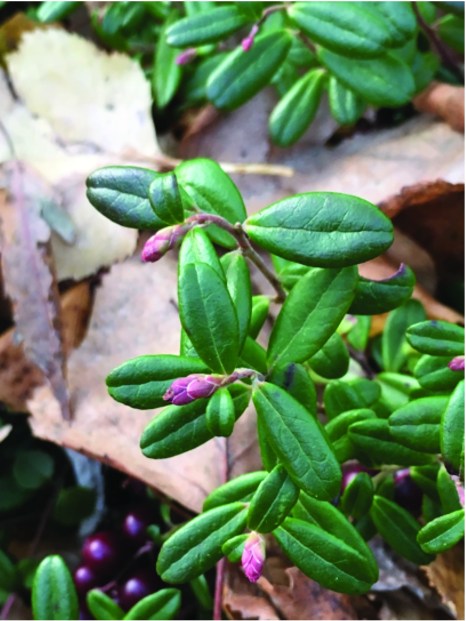
I recently visited Washington state and had the opportunity to go to Mt. Baker and pick huckleberries! ….or were they blueberries? If I were to be placed in this field of wild berries out of context, I would have without hesitation called them blueberries. I might add that our local tour guide and friend referred to them as “huckleberries”. She was born and raised in Montana, which leads to even more interesting facts about huckleberries. I have also lived in Montana and while living there I learned that huckleberries are considered to be very, very special. Any tourist shop will have huckleberry jams, jellies and other treats. Montanans are so proud of this berry that the state has made it a misdemeanor to label a product huckleberry if it contains any other fruit (http://codes.lp.findlaw.com/mtcode/80/11/7). All of this huckleberry/blueberry confusion led to more questioning and searching the internet for the difference between these two common names. I think that we gathered and gorged on Vaccinium delisiosum (Cascade Blueberry or Western Huckleberry), but I am still not positive. Whatever they were they were delisioso!
Here are a few things that I have gleaned from a little searching:
The common name ‘huckleberry’ includes two different genera (with the exception of next bullet), Vaccinium and Gaylussacia, both in the Ericaceace family
According to the USDA Plants Database, there are 14 plants with the common name of ‘huckleberry’ to include not only Gaylussacia (8 species) and Vaccinium (4 species) but also Solanum (spp: melanocerasum and scabrum)
Fruits of Gaylussacia have 10 chambers resulting in 10 large seeds, whereas Vaccinium have 5 chambers and many numerous and smaller seeds
According to the USDA Plants Database, there are 8 species of Gaylussacia, all east of the Rocky Mountains.
Blueberries have been domesticated, while huckleberries have not. Check out the following blogs for more adventures in differentiating these berries: KD Fairbanks
Huckleberries, and Blueberries
.
Barney, Danny. L. 1999. Growing Western Huckleberries. Available online: Huckleberries
USDA Natural Resources Conservation Service. 2016. Plants Database. Available online: Plants Database
Spruce Bark Beetles and Berries
Being from the Kenai Peninsula and having first hand experience with spruce bark beetle die off in my home town of Moose Pass, it was interesting to read the effects the spruce bark beetle die off had on berry populations in the area. This article goes into depth about the effect tree coverage had on the berry stands in the area after the trees began to grow back after the spruce bark beetle die off. Each berry tested had slightly different results, but for the most part they averaged being the most productive at 50% coverage, then loosing productivity after that. BE Moose Pass, AK
Abstract: “Land managers on the Kenai Peninsula have responded to recent extensive infestations of forests by spruce beetles (Dendroctonus rufipennis (Kirby)) and associated increased fire risk with a variety of management approaches. To provide additional ecological information upon which to base these management prescriptions, we evaluated the response of the cover of berry species to variations in landscape factors and environmental conditions, including crown closure. Data were sufficient to describe the response of cover of bunchberry dogwood (Cornus canadensis), black crowberry (Empetrum nigrum), false toadflax (Geocaulon lividum), strawberryleaf raspberry (Rubus pedatus), lingonberry (Vaccinium vitis-idaea), and a combination of 24 other species through multinomial logistic regression. Crown closure and forest overstory type significantly influenced the cover of all berry species. Increasing crown closure had a negative effect on all berry species except strawberryleaf raspberry. Level of infestation by spruce beetles was significantly related to the cover of all species except lingonberry. Our findings indicate that spruce forests may be managed to enhance berry cover and that choice of management technique (e.g., timber harvest, prescribed fire) will likely result in different outcomes.”
During, L.H., M.I. Goldstein, S.M. Howell and C.S. Nations. 2008. Response of the cover of berry-producing species to ecological factors on the Kenai Peninsula, Alaska, USA Canadian Journal of Forest Research.Vol. 38, No. 5 : pp. 1244-1259
Plant antifreeze
Being in Biology right now we are learning about proteins so I looked into the proteins that keep plants from freezing in harsh Alaskan winters. I found an article titled “Antifreeze proteins enable plants to survive in freezing conditions” by RAVI GUPTA and RENU DESWAL. I was intrigued by the fact that this article came out of India, where I imagine they do not get cold weather like maybe a northern European country, where I would expect an article like this to come from. The article goes into depth of how the proteins impede the hydrogen bonds of the water molecules so that they cannot bond and form ice crystals.
“Overwintering plants secrete antifreeze proteins to provide freezing tolerance. These proteins bind to and inhibit the growth of ice crystals that are formed in the apoplast [conduit for water transport in plants where water moves through the cell walls without going through the inner cell membrane] during subzero temperatures. Antifreeze activity has been detected in more than 60 plants and antifreeze proteins have been detected in 15 of these, including gymnosperms, dicots and monocots.
The main function of antifreeze proteins is inhibition of ice crystal growth rather than the lowering of freezing temperatures. Antifreeze activity with higher Thermal hysteresis also exists in plants. Calcium and hormones like ethylene and jasmonic acid have been shown to regulate plant antifreeze activity. Plant antifreeze proteins may have evolved nearly 36 million years ago”.
Gupta, R. and R. Deswal. 2014. Antifreeze proteins enable plants to survive in freezing conditions.J Biosci. 39(5):931-44.
Posted in Physiology
Northern Bushcraft in Canada
Check out this site that has a summary of all the wild berries found in the northern provinces of Canada plus lots more. Northern Bushcraft
Blueberries and Lingonberries in Pie
Blueberry Cranberry (lingonberry) Pie, muffins, anything Mixing about half and half of blueberries and cranberry (lingonberry) pie adds a surprisingly tasty zing. It’s also a nice way to use lingonberries in a pie. If you make an all lingonberry pie, it can be a little overwhelming, but half and half is just about right for my taste. As I mentioned earlier in my post on blueberry and raspberries for breakfast, I prefer not to add sugar to my berries which is part of the reason that I have a hard time using lingonberries. Now that I know lingonberries top the charts in antioxidants, I want to try to incorporate them even more into mine and my family’s diet. Of course, extrapolate from pie, and half blueberries and half lingonberries will do in just about any baked good or jam you are making.
Holloway, P.S., R. Dinstel and R. Leiner. 2006. Antioxidants in Alaska Wild berries. Georgeson Botanical Notes No. 35. Available Online: Berries and Antioxidants
Ode to pollinators
If you’re a gardener, berry lover, or if you eat food, it wouldn’t hurt to spend a little more time appreciating our pollinators. One of my favorite authors, Rowan Jacobsen, wrote an enlightening book on the topic of pollination–Fruitless Fall (see below), in particular, on colony collapse disorder in honeybees. It’s frightening to think about the fragility of our current system of pollination. Luckily, wild berries in Alaska do not depend on managed hives for pollination. On my reading list since I read Fruitless Fall is Forgotten pollinators. We should probably all spend a little more time appreciating these flying wonders. I enjoyed watching the beautiful video of buzz pollination(see below) And while we’re on the topic, check out the Xerces society. They have a plethora of great resources on protecting and appreciating our sometimes forgotten and under-appreciated invertebrates. HR Fairbanks
Buchman, S. L. 1997. Forgotten pollinators. Island Press.
Karl Foord. 2014. Buzz Pollination. http://www.youtube.com/watch?v=7HOEuqJUvPE
Jacobsen, R. 2010. Fruitless Fall: The Collapse of the Honey Bee and the Coming Agricultural Crisis. Bloomsbury, USA.
Xerces Society for Invertebrate Conservation (Home Page). 2016. Available at: http://www.xerces.org. 14 Sept, 2016.
The Search for Lingonberries
≈

After a solid afternoon of studying, my younger sister and I headed out for a walk around the neighborhood. Because we live next to a powerline cut, I thought that was a good place to go look at various plants and vegetation. We came across multiple stands of lingonberries. I didn’t know that we had so many close to our house. My sister enjoyed eating them after I explained what they were. She is a berry eating machine! I personally don’t care for raw lingonberries, but she was all over them. There are plenty more to go out and pick. We had fun counting all the buds that will hopefully turn into berries for next year. It made for a fun afternoon. CM Fairbanks
Bears and Berries
Bears and Berries
Bears are of serious concern for many Alaskan berry pickers. With many berries ripening around fall in the interior, both black bears and grizzlies are gearing up for winter hibernation and need to consume as many calories as possible. I have encountered many bears while out berry picking and not only is safety an issue of concern but so is the bears need for nutrients. While we know as nature harvesters that we are not alone and we are not dominant we also need to know how to be safe while in “bear country”.
A few safety tips while berry picking; make noise so not to startle nearby animals, be aware of your surroundings and aware that surroundings can change quickly. It is safe to go with another person or in a group, but that is not always possible. Depending on your comfort levels and the location in which you choose to berry pick, a bear bell, bear spray or even a large caliber gun may be recommended. It is also important to have a basic understanding of the animals you may encounter.
Bears are massive wild animals that can weigh anywhere between 200lbs (black bear) and 800lbs (grizzly bear)(National Geographic). They can be nearly as small as a large dog or taller than a full grown man and are almost pure muscle. Berries are important to bears livelihood because they provide a major source of nutrients and are abundant in the wilderness. Bears are also very important to the propagation of berries. A black bear can consume over 30,000 berries in one day and the seeds pass through the bear’s digestive system unbroken and able to germinate (Berries). They can be distributed miles always from the original site and encourage more growth in the following years. These berries contain high amounts of antioxidants and the seeds of some species can contain vitamin B-17, these are both considered anti-cancer compounds by some scientists, and although captive bears have been found to have cancer, no wild bears have ever been reported to have cancer (Berries).
As we know, berries are important to us for our own personal consumption, we also know how important they are to bears. Be safe while you are berry harvesting but also be respectful.
Here is a video of a couple bears eating berries. You can see how fast and efficiently they can consume them, probably better than a berry rake. (VIDEO) LH Fairbanks
“Berries – a Critical Food.” North American Bear Center -. N.p., n.d. Web. 22 Sept. 2016.
Society, National Geographic. “American Black Bears, American Black Bear Pictures, American Black Bear Facts – National Geographic.” National Geographic. N.p., n.d. Web. 22 Sept. 2016.
Society, National Geographic. “Grizzly Bears, Grizzly Bear Pictures, Grizzly Bear Facts – National Geographic.” National Geographic. N.p., n.d. Web. 22 Sept. 2016.
Posted in Berry Harvesting, Foraging, Uncategorized, Wild harvesting, Wildlife
Anthocyanin Composition and Antioxidant Activity of the Crowberry
Thirteen kinds of anthocyanins were identified in freeze dried crowberry extract. The total content was higher than nine other major berry species. It also held the highest antioxidant content.
Crowberries are suggested to help prevent chronic diseases due to their high antioxidant activity. KH Fairbanks
Kenjirou, Ogawa. Hiroyuki, Sakakibara.Rei, Iwata.Takeshi, Ishii. Tsutomu, Sato. Toshinao, Goda. Kayoko, Shimoi. And Shigenori, Kumazawa. 2008. “Anthocyanin Composition and Antioxidant Activity of the Crowberry.” Journal of Agric.Food Chem. 56 (12) pp4457-4462.
Posted in Crowberry (Empetrum nigrum), Health
Nagoonberry recipes
I had never heard of this berry prior to being in this class, so naturally I was very interested in finding out more about it and came across some recipes added by someone here at UAF! Along with recipes the article also talks about how to clean berries, store them, freeze and dry them.
Nagoonberry Jelly
5¾ cups nagoonberry juice
¼ cup lemon juice
6 cups sugar
3 ounces liquid pectin
Sterilize pint or half-pint canning jars and prepare lids. Open liquid pectin pouch and stand upright in a cup or glass. Combine nagoonberry and lemon juices and sugar in a large saucepan. Place on high heat; stir constantly and bring to a full rolling boil that cannot be stirred down. Add the liquid pectin and heat again to a full rolling boil. Boil hard for 1 minute, stirring constantly. Remove from heat and quickly skim off foam. Immediately pour hot jelly into hot canning jars, leaving ¼ inch headspace. Wipe jar rims and add prepared two-piece lids. Process 5 minutes in a boiling water canner.
Nagoonberry Syrup
1 cup nagoonberry juice
2 cups sugar
1 teaspoon lemon juice
Combine nagoonberry and lemon juices and sugar in a saucepan and heat to 160°F. Use a candy thermometer; do not boil. The syrup is ready to use over waffles, pancakes, hot biscuits, ice cream and other desserts. Syrup will keep up to six months in the refrigerator without sugaring.
For long-term storage: Sterilize pint or half-pint canning jars and prepare lids. Immediately pour hot syrup into hot canning jars, leaving ¼ inch headspace. Wipe jar rims and add prepared two-piece lids. Process 5 minutes in a boiling water canner.
Dinstel, R. R. & Johnson, M. 2015. Nagoonberries. Available online: Recipes. Accessed 21 Sept, 2016.
Dinstel, R. R. & Johnson, M. 2015. Nagoonberries. Available online: https://www.uaf.edu/files/ces/publications-db/catalog/hec/FNH-00118.pdf. Accessed 21 Sept, 2016.
Posted in Uncategorized
What’s the buzz all about?
Pollination is the process that leads to the production of the fruits we eat and the seeds we need to grow more plants. It is the process of transferring pollen from flowers to flowers to aide fertilization and encourages new propagation. Natural pollinators are highly effective and although man can mimic the pollination process done by many species, no amount of mimicry can compare to the efficiency of the many different bee species. Of the large variety of bee species, I find the bumble bee to be the easiest to identify as well as the easiest to actually see the pollination process.
There are over 250 bumble bee species worldwide with 49 of them being native to North American (Inouye). Scientifically they can be identified by dividing them into three groups based on the length of their proboscis or tongue (long, medium and short), but the best way to identify a bumble bee is by its fairly large round shape, super fuzzy body and the amplified buzzing sound emitted by their wings. The bumble bees tend to build nests in old hollowed out logs, abandoned rodent holes and other locations down on the ground. The queen will borrow into the ground and hibernate throughout the winter while the rest of the colony will die off in fall. During the spring the new queens come out of their borrow, find a suitable place for a nest and begin to collect pollen and nectar to help feed the first generation of worker bees to hatch. The bumble bee queens will rear a few generations of worker bees which are all non-fertile females to help collect pollen and nectar to help feed the final generation, next year’s queens and fertile males (NPS).
The bumble bee is a hugely important pollinator because of the efficient techniques in which these bees can collect and transfer pollen. The bumble bee will bite the flower in its jaws and use its flight muscles to microscopically and violently vibrate the pollen grains off the flowers anthers this is called buzz pollination or sonication (Inouye). The pollen will stick to the fuzzy body of the bumble bee as well as sticking to what is referred to as pollen baskets or sacs on the back legs. As the bumble bee flies from flower to flower each time carrying away a little pollen as well as transplanting pollen from flower to flower and possibly fertilizing hundreds. “The average mass of pollen and nectar carried by bumblebees returning to the nest is around 25% of their body weight. However some bumblebees fly back carrying as much as 75% or more of their body weight!” (Nature mapping).
Humans are deeply invested in the health status of bee populations because of the environmental services they provide and because of it many species are being commercially developed and shipped all over the globe, even in places they don’t naturally occur. Another hot topic is that bees are of conservation concerns. Human activities including habitat degradation, pesticides, diseases and floral resource depletion can have detrimental effects to bee populations (Inouye). Bees are of major importance to the Earth’s ecosystem functionality and are worth giving a second thought before smashing them out of fear of being stung. Next time you got a big bumble headed your way, think about the significant job that bee performs before reacting with fear. LH Fairbanks
“Bumblebee.” Nature Mapping Foundation. N.p., n.d. Web. 22 Sept. 2016.
Inouye, David. “Bumblebees (Bombus Spp.).” United States Department of Agriculture Forest Service. University of Maryland, n.d. Web. 22 Sept. 2016.
“Pollinators – Bumble Bee.” National Park Services. U.S. Department of the Interior, n.d. Web. 21 Sept. 2016.
Posted in Pollination, Pollinators
Crowberry Pie
Recipe for Crowberry Pie:
-Pastry for double-crust, 9 inch pie (unbaked)
-4 C crowberries
-2 Tbsp lemon juice
-1 C granulated sugar
-1/3 C flour
-1/8 tsp ground cloves
Line pan with pie crust. In a large mixing bowl combine crowberries, lemon juice, sugar, flour, and cloves; mix well and pour into unbaked pie shell.
Dampen edge of shell with water, add top crust and flute edge. Slit top of pie.
Bake at 425F for 10 minutes.
Reduce heat to 375F and bake for 30 minutes.
Remove and cool.
Yields 6-8 servings
Posted in Crowberry (Empetrum nigrum), Recipes
Blueberry Wine
This is an article about the uses of mainly Blueberries and their uses in the process of winemaking. The author, tells the story of John Tamburello, and how he got his start in winemaking as well as some of the berry conditions that influence the taste of the wine such as rainfall, size and insect populations. At the end he even goes over the various flavorings of the wines. Overall a very informative and inspiring read for those who wish to learn about winemaking.
Chiasson, B. 2016. Blue wine and berries. Available online: winemaking Accessed 21 Sep, 2016.
Posted in Blueberries (Vaccinium), Recipes
Berry picking in Canada
This is a short story by author Ron Melchiore about how his family uses the woods around their property to harvest Blueberries and Cranberries. He walks you through their process and their approximate annual yield for each season of harvesting as well as sharing some of the products his family makes with the berries. this article is quite informative and well worth the read even if it is a quick one! AA Fairbanks/Seward
Melchiore, R. 2016. From the ravages of fire come berries. Available online: Berry picking
Posted in Berry Harvesting, Wild harvesting
Show me the Yummy
Show me the yummy. July 22, 2016. Berry banana bread recipe. Available online: Recipe. Accessed September 21, 2016.
Blueberry muffin energy bites. Recipe. Accessed September 21, 2016.
CA Arizonaa
Posted in Recipes
Uses of Berries
As we are learning more about wild & cultivated berries of Alaska, I was wondering what others uses berries might have. I found a page made by Tanana Chief’s Conference and wanted to include the information they have on their website!
Spruce Tree needles –
Symptoms: Burns, Childbirth, colds/ flu, sinus infections, sore throat, stomach troubles, tuberculosis, urinary problems, stomach issues, cuts or scrapes, skin troubles, childbirth.
How to use: Boil needles to release scent in air, you can also bathe in the needles, chew the needles, steam, or salve.
Burns: Heat spruce pitch and apply to relieve
Colds/Flu: Spruce bark tea/Spruce needle tea
Childbirth: Mixture of Spruce gum/ charcoal applied to child’s navel Most common uses: Spruce Bark & Spruce Pitch will be either boiled or chewed for applications
Rose Hips –
Symptoms: Rose hips are high in Vitamin C, A, B, E, & K. Good for immune system, heart/circulatory systems, nervous system, anti-inflammatory
How to use:
Skin: Rose hip oil can help with moisturization, and can be used to treat scars and acne
Burns: Rose Hip oil can be used as a soothing treatment on skin burns Organ Systems: Can help with the immune, digestive, reproductive, and heart/circulatory/nervous systems.
Most common uses: Rose hips are used in a tea, eaten raw, cooked, made into jelly.
TCC’s Guide to Natural Medicine. Uses of Berries Accessed 21 Sept, 2016.
Posted in Health, Rose Hips (Rosa sp.), Skin Care
Berries and Survival
Survival of the Berries Here are some tips about eating berries in the wilderness. I thought this would be a nice blog post not only because it is great information but who knows maybe one day it could save a life. I hike a lot and I actually carry a field guide on me that talks about plants and berries. If I am not 100% familiar with the plant I do not plan on eating it. This article talks about berries of the rose family being edible (Edible and non Edible Berries p. 2, Angela). That is something nice and easy to remember when hiking out and about.
Posted in Berry Harvesting, Foraging
Beauty berry
The link above talks about beautyberry propagation. For those who do not know what a beautyberry is (I sure didn’t), it is a berry that is bright purple, it grows in bunches, and it is definitely a beautiful plant. It will shed its leaves and that is when the beauty of the plant really stands out. It blooms tiny pink flowers and is known to attract different types of birds, and then grows into the bright purple berry. It also acts as a perennial so it grows back on its own every season. It grows mostly in the southeast area of the United States. http://www.bhg.com/gardening/plantdictionary/shrub/beautyberry/ The article gives you step by step direction on propagation of the beautyberry. It seems like a very interesting process and a careful one as well. AK Wasilla
Posted in Wildlife
Berry Rakes- good and bad
Berry Rakes for Better or Worse
I have often wondered whether the berry rakes used by berry pickers actually worked against the pickers’ wishes. Although not many of us rely on berries as one of a few food sources, we would like to continue areas of good yield whenever possible. While berry rakes may allow for more berries to be picked in a short period of time, do they really help in the long run? According to this article in the Fairbanks Daily News Miner, many people do not know how to use rakes correctly, causing lots of harm to the stands where they are harvesting. The article lists several different people’s opinion on how to properly use rakes without harming the plants and whether they are actually necessary.
The article can be found here: berry rakes
Posted in Berry Harvesting