Author Archives: Hortalaska Berries

Antioxidants +

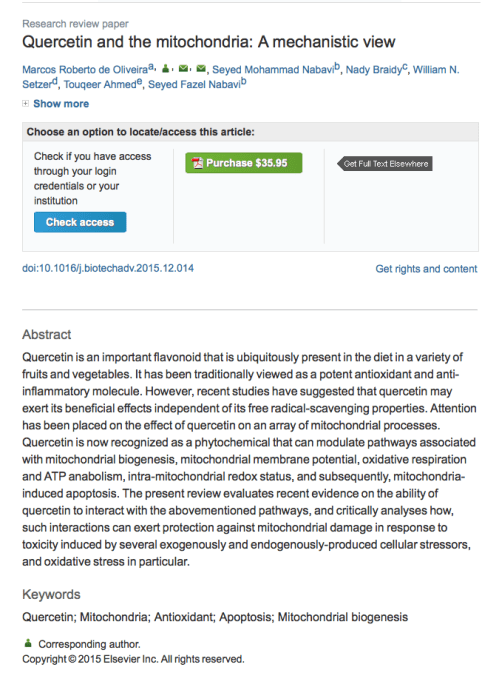
A lot of research on berries over the past few years has emphasized their antioxidant potential. There is a lot more to berries than simply antioxidant activity, and this abstract hints that one of the most abundant flavonoids in Alaska berries especially lingonberries, does a lot more. Mitochondria are the powerhouses of cells. Respiration and energy production occur in these organelles. Quercetin apparently has a huge influence on activity in this part of the cell. Go lingonberries! Check out the entire article although you will have to find a library with free copies to this journal. A single article is expensive.

QUERCETIN

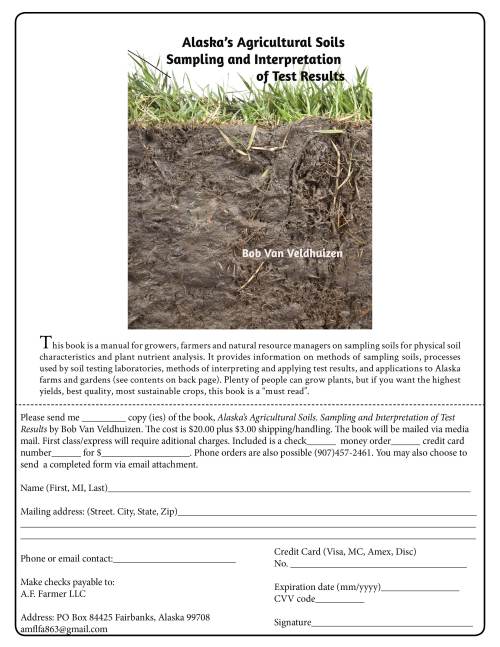
New book on Alaska Soil Analysis

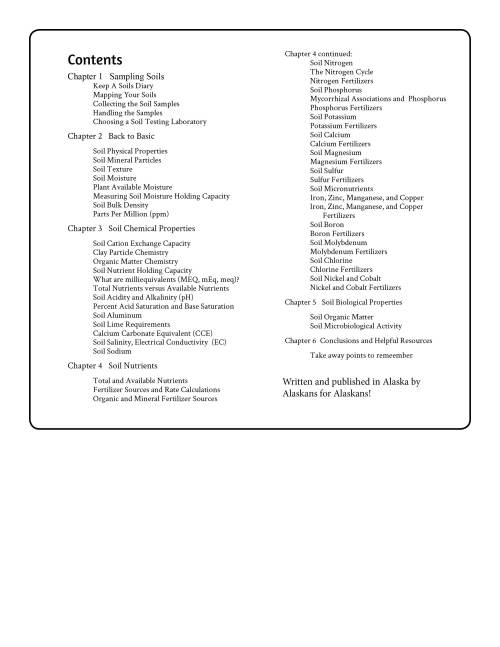
If you are interested in learning more about what all those numbers mean when you take a soil sample and get a bazillion numbers back that are pretty confusing, this book explains them all in great detail. Want to be a good grower? Then you must be good at managing soils.

Order form1Order form2

How to study plant roots!

This is an interesting article about excavating roots to show their growth. The plants are apples and raspberries. We have done root excavations at Hort UAF, and it is a pain in the backside! This excavation is extraordinary!  Root excavations

Bumble bees are best for haskap pollination

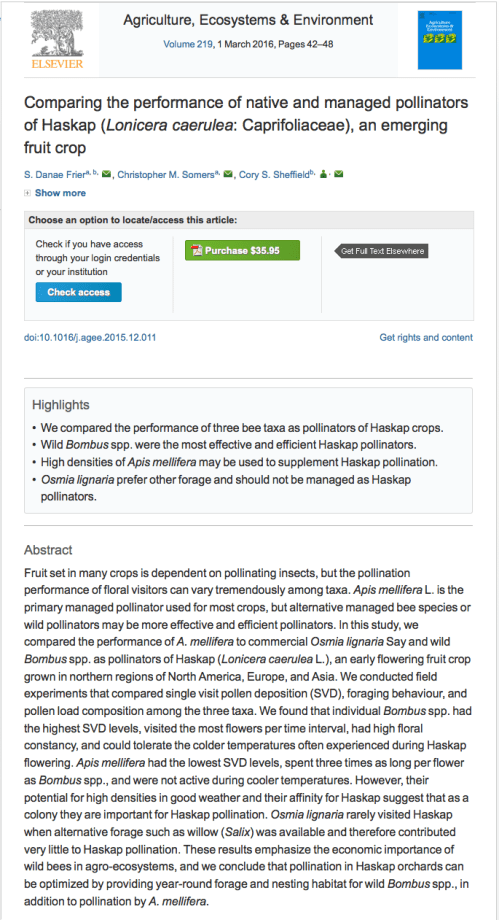
This research showed that bumble bees, Bombus terrestris were the most important pollinators of Lonicera cerulea, honey berry/haskap. Honey bees are good as a supplement but they don’t work in cold temperatures, and their efficiency is far less that the B.B.

2016.Frier et al.


Alaska Butterflies

Here is a link to a book just published on all Alaska butterflies. Senior author is the late Ken Philip, an amazing man who loved butterflies and tromping around the state looking for them.  He was a wonderful resource for all things butterflies. His collections now reside at the UAF museum and the Smithsonian.

Alaska Butterflies

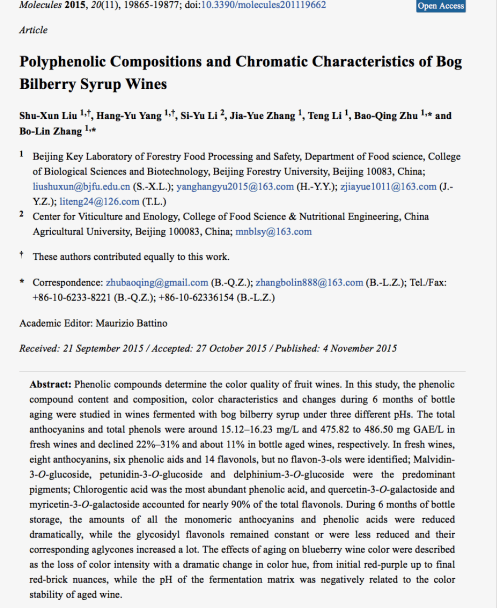
Color and antioxidants in bot blueberry wine

This is an interesting article from China that examines the changes in antioxidants of bog blueberry in winemaking as the wines age.

V. ulig wind

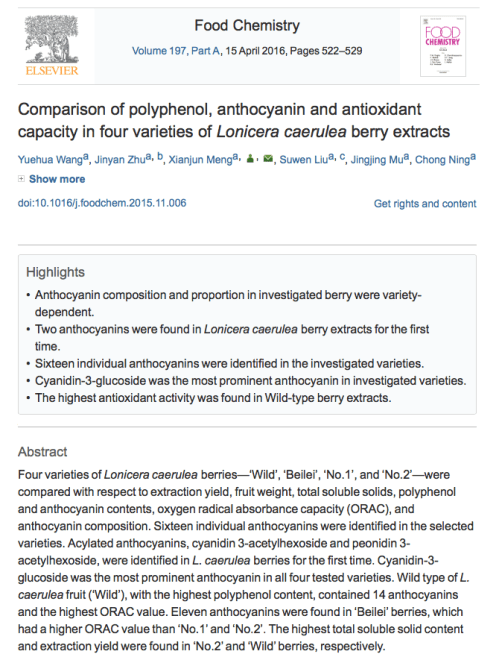
This research examines the polyphenol, anthocyanin and antioxidant capacity of 4 cultivars of honey berry extracts. The abstract and citation are included.

AbstHaskap antioxidantsract

Alaska-Yukon Circumboreal Region Map

Here is a great document with outstanding photos of a mapping project for the vegetation of the Alaska-Yukon Region by Fairbanks researcher, Torre Jorgensen and others. It is an attempt to refine vegetation classification systems using the latest technology.

Jorgensen, T. and D. Meidinger. 2015. The Alaska Yukon Region of the Circumboreal Vegetation map (CBVM). CAFF Strategies Series Report. Conservation of Arctic Flora and Fauna, Akureyri, Iceland. ISBN: 978-

9935-431-48-6

Circumboreal Map

Processing and phenolic compounds in honey berry

The aim of the study was to evaluate different methods used for the preparation of powders from blue honeysuckle (Lonicera caerulea L. var. kamtschatica) cv. ‘Wojtek’, and the effects of these methods on chemical composition and antioxidant activity of lyophilized powders and pomace. The analyzed samples were evaluated for their basic chemical composition (dry weight, pH, total acidity, sugars (glucose, fructose and sucrose), and antioxidant capacity (FRAP, ABTS). Polyphenolic compounds were identified and quantified by UPLC-PDA-MS/MS. Thirty eight polyphenolic compounds, including eight phenolic acids, eight anthocyanins, five flavan-3-ols, twelve flavonols and five flavones were identified in blue honeysuckle products. The highest content of bioactive compounds was detected in juice pressed from peels, as compared with fresh berries and other products. Moreover, crushed berries were found to be a better material for obtaining dried product than intact fruit. Jan OszmiańskiAneta Wojdyło, and Sabina Lachowicz. 2015. LWT- Food Science and Technology. 2015. Effect of dried powder preparation process on polyphenolic content and antioxidant activity of blue honeysuckle fruits (Lonicera caerulea L. var. kamtschatica) Available Online: Abstract

Anybody for a pi pie?

This certainly would be a fun way to serve berry pie! Pi Pie

Berry Cultivation In Norway

This is a short presentation from http://www.bioforsk.no that shows some interesting berry research with cloudberry (Rubus chamaemorus) , crowberry (Empetrum nigrum),  and lingonberry (Vaccinium vitis-idaea)  Berry Cultivation Norway

Elderberry Syrup

Elderberry syrup Today I was lucky enough to take a workshop at the Eagle River Nature Center presented by Chief Naturalist Ute Olsson.  She covered a lot of ground.  The ERNC calendar is here with a brief description of the workshop: Workshop announcement.  In the workshop we made elderberry syrup.   Elderberries are highly regarding for their nutraceutical properties.  The workshop presented a recipe found on Wellness Mamas website which can be found here: Elderberry Syrup.  The dried elderberries we used were actually quite tasty on their own and had a chocolate hint to them.

Highbush Cranberry Bark as medicine

Highbush cranberry bark Highbush cranberry has traditional uses beyond foods created from its berries.  The bark is also used for medicinal purposes.  The Alaska Native Knowledge Network has an entry from Eleanor Viereck’s book here http://www.ankn.uaf.edu/curriculum/Books/Viereck/viereckhighbush.html. Audrey Sunnyboy’s book Denyaavee, recommends using one teaspoon of dried bark or one tablespoon of fresh bark per one cup of boiling water to make a tea.   To harvest the bark, simply use a vegetable pealer and shave off some bark.   Viereck, E. 1987. Alaska’s wilderness medicines: Healthful plants of the far north. Alaska Northwest Books. Anchorage, AK. Sunnyboy, A. 2007. Denyaavee. Medicine plants of interior Alaska’s People.

Exploding Flowers of the Bunchberry – world’s fastest flower

Explosive Flowering of the Bunch Berry

NPR’s All Things Considered covers the discovery of the Bunch Berry as the worlds fastest flower. The audio recording on NPR’s website (link below) includes an interview with the student, Sarah Klionsky, who made the initial discovery and her Biology professor, Joan Edwards, who facilitated the subsequent research. The story drives home how important discoveries can still be made of what is often overlooked.   Exploding Bunchberries. More about the research that was done and how it was performed is available on Williams College website:  Student Research

Naming of the Juneberry. Or is it Saskatoon?

What’s in a name? Saskatoon vs. Juneberry

This article from Time magazine examines the significance placed on what the Saskatoon berry is called when it comes to introducing it to the US market. Canadians cry foul at the efforts to re-brand Saskatoons as Juneberries especially considering that the cultivars generating the excitement in the US were developed in Canada. With billions of dollars potentially at stake, the controversy will, however, likely continue. I agree with the Michigan grower quoted in the article. Saskatoon is a much sexier name than Juneberry and gets my vote.  What’s in a Name?

Origin of Haskaps

This article is a succinct history of the haskap from Japan, Russia and Canada with dates.  Seems as though Alaska had some a little earlier than what is published here.  Haskap

Honeyberry Buckle

Modified from King Arthur Flour Company. 2003. The King Arthur Flour Baker’s Companion. WW Norton & Co, New York.

Recipe:  Honeyberry Buckle (modified from a blueberry buckle recipe, ’cause “honeyberry buckle” is fun to say)

Batter:  3/4 cup sugar, 4 tbsp. butter, 1 large egg, 1/2 cup milk, 2 cup all-purpose flour, 1/2 tsp. salt, 1/4 tsp. each cinnamon and cardamom, 1 tsp. vanilla extract.  2 cups fresh honeyberries OR 2 cups frozen NOT thawed. (Add while still frozen, or the batter will turn an unpleasant pinky-purple color.)

Streusel:  1/2 cup sugar, 1/2 cup all-purpose flour, 1 tsp. cinnamon, 2 tsp. lemon zest, 1/2 tsp. salt, 5 tbsp. softened butter.

For the batter:  Preheat the oven to 375 degrees F.  Cream the butter and sugar, then add egg and mix at medium speed for 1 minute.  Whisk the dry ingredients in a separate bowl.  Stir half the dry ingredients into the butter/egg mixture, then stir in the milk and vanilla.  Add the rest of the dry ingredients, then gently fold in honeyberries.  Spread the batter in a greased 9-inch square or 9-inch round pan.

For the streusel: In a small bowl, whisk the sugar, flour, cinnamon, lemon, and salt.  Add the butter and mix with a fork or your fingers to make medium-sized crumbs.  Spring the streusel evenly over the batter.

Bake:  45-50 minutes, or until a toothpick inserted into the center comes out clean.  Remove from the oven and cool in its pan on a rack.  Serve with coffee in the morning or with whipped cream or ice cream for dessert.

Berry Painting

Get creative! Here are actual instructions for berry painting haha! You can be 5 or 50 year old to do this while eating your berries if you ask me!  Berry Painting Berry Painting

Drying lingonberries

Apparently pretreating lingonberries before drying them cracks the skins and helps the drying process. I was putting them directly in the dehydrator and wondering why they were taking so long to dry. Then after several days they were almost powdery. I am going to try this method next year and see if it works better. In addition to the drying tips there are a number of good guidelines here for storing your lingonberry harvest. Planning on printing this out because lingonberries are my favorite!   Drying lingonberries

Weeds and Berry Pollination

This week, I listened to a brief 2012 KYUK radio piece on the threat of invasive white sweetclover (Melilotis alba) to Y-K Delta berry patches. It was suggested that the weed, which at publishing had yet to be noticed off the road system, had the potential to invade wild blueberry and cranberry stands in the Interior and lure pollinators away. If blueberries and cranberries received less pollinator visitation or the incorrect pollen, fruit set could be affected.

Research conducted by UAF on 20 test plots near the Steese, Elliot and Dalton Highways found that flowering sweetclover actually encouraged pollinator visitation to berries. Cranberries and blueberries saw at least 3 times the pollinator activity they normally would and cranberries actually had improved fruit set when flowering sweetclover was present. However, researchers couldn’t quite link the results solely to the sweetclover.

Another study was done in a more controlled setting (sweetclover was introduced to test plots around UAF):

“During a rainy June in the first year, conditions seemed to draw pollinators away from native berry plants that were a moderate distance away. During a sunny June in 2012, conditions were good enough that all the plants seemed to benefit.”

More research is necessary, but it was suggested that certain geographic areas might be more susceptible to sweetclover competition (especially those where the sweetclover and berries have highly overlapping flowering periods). Competition for space, however, might be the real issue for native berries:

“Mulder said white sweetclover towers over berry plants and adds nitrogen to the soil, which are factors that could cause it to slowly crowd native plants out of their turf.”