
PIneberries in Alaska?

Have you heard about Pineberry? This berry looks like strawberry, but it is white with red seeds! Apparently this is the oldest variety of strawberries. Originally strawberries were white in South America. Pineberry was saved from extinction by breeders working exclusively with VitalBerry BV when the original source material was discovered in Southern Europe. The breeders used this source material to cross it with an existing variety to improve the original pineberry. Read more: Pineberries
Berries as Dyes

I came across a posting on Facebook about a woman who used chokecherries to dye yarn and I searched a little further on the internet about how to go about dyeing yarn with berries. Here’s just one example of all the information you can find out there on how to use natural dyes like those found in berries to dye yarn and fabrics:    Berry Dyes Here is a Youtube video of the same process:  Dying Yarn with Berries

Alleycropping

A good read on alleycropping put out by the University of Missouri Center for Agroforestry.  It includes definition, design, operation and maintenence, and success stories!   Alleycropping

Hardy Kiwi in Alaska?

Hardy Kiwi Has anyone tried growing hardy kiwi?  I recently purchased some that were grown in Oregon. They were pretty yummy and they lasted a long time in the fridge.   I think I’ve seen that these were being grown at the Botanical Garden in Anchorage and I know they were growing in at least one garden in Anchorage. Cornell University Department of Horticulture provides information on growing and propagating kiwi fruit here: Hardy Kiwi

Buzz Pollination

Bumblebees and buzz pollination make the NY times. This article reviews work scientists are doing to understand buzz pollination and how it and the flowers that rely on it evolved. It provides a good description of what buzz pollination is explaining that “Bees experience forces 30 times greater than gravity as they buzz for pollen — near the limit of human endurance.”  Buzz Pollination

Berry Antioxidants and Cancer

An interesting article from Scientific American–taking antioxidant supplements may make certain types of cancer grow faster.  Some very specific types of cancer cells are susceptible to attack by free radicals (melanoma is the biggest example).  Some studies have shown that antioxidant supplements can protect these cancer cells, in addition to the rest of the cells in the body.   Antioxidants and Cancer The take-away message should NOT be “Antioxidants cause cancer.”  The take-away message, I think, should be that if you are taking supplements and are diagnosed with certain types of cancers, stop taking supplements.  Continue to eat a normal healthy diet that contains whole foods with naturally-occurring antioxidants, but do not load up on extras.

Berry Mojito!

For after a long day of berry picking in the fall and you just need to sit back and relax while enjoying your labors.

Wild Berry Mojito

8 to 12 fresh mint leaves

3 to 4 fresh blackberries

3 to 4 fresh blueberries

3 to 4 fresh red raspberries

1/8 cup lime juice

2 to 4 tsp. of sugar

1-12 oz. glass of crushed ice

2 oz. light rum

1/4 cup soda water

1 fresh mint sprig (for garnish)

Directions:

Carefully press mint leaves into the bottom of the glass with the back of a wooden spoon to release their oils (do not tear leaves).

Mix mint, crushed wild berries, lime juice and sugar in a 12-ounce glass.

Fill glass with crushed ice.

Stir well until the ice is reduced by 1/3 and then top with more crushed ice, stirring until the glass begins to frost on the outside.

Pour in soda water and rum, stir again. Garnish with a sprig of fresh mint.

Recipe provided by Stacy McGuigan of Everyday Celebrations,www.ecpartyconcierge.com. Stacy is CEO of Everyday Celebrations, a local event planning business.

Berry Picking in Finland

Today I thought about my attitude towards berry picking when I was a kid. Me, my brother and my parents used to go berry picking together a lot. Blueberries, raspberries, cloudberries… I think it’s funny how me and my brother were talked into berry picking: we were promised to get a burger and fries from our little local grill after a long day in the forest. Today I wouldn’t enjoy that burger as much as I enjoy fresh berries picked up with my own hands from the pretty forests in Finland! Now that is the real reward after roaming a long day in the woods!- Sofia H.

Blueberries and Soils

Soil pH wrong for blueberries? Blueberries like acidic soils and it’s unlikely that your garden naturally has the perfect condition.  The Alaskan Berries website has a soil recipe geared towards Alaskan soils.  It also has helpful hints for growing other berries. Soils and Blueberries

Plants and Pollinators

This presentation on pollination effectively illustrates the relationship between flowers and their pollinators.  It contains striking photos of pollinating insects and birds and is told from the perspective of an entomologist.  The photos of pollinating bees and bats are particularly dramatic.  Plants and Pollinators

Great Recipe Book

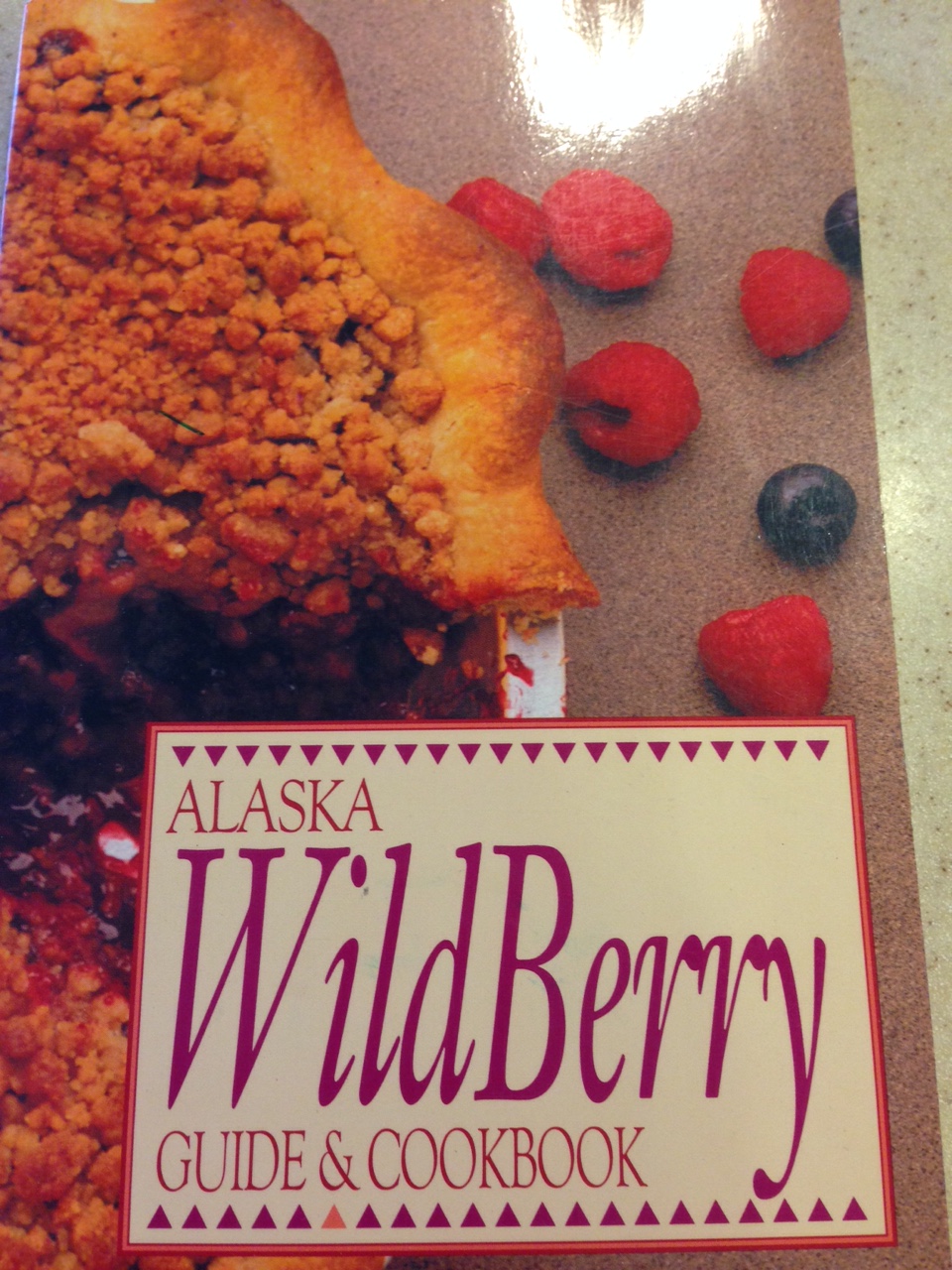
I found this gem on Amazon through a used book seller. It is an older book (original date of publication is 1982, but it was reprinted in 1990). It has a nice variety of color photos of Alaska berries and then the rest of the book is a cookbook that goes beyond the traditional use of berries as a dessert. They have meat dishes with berries, beverages, baked goods, and of course desserts. It has sections at the end about drying and freezing berries. There is no author listed on this book, but it berrycookis published by Alaska Northwest Publishing. berrycook2

Making Mead with Wild Berries

Inspired by whoever posted the wine recipe last week, here is a mead recipe.  Being a homebrewer, this recipe excited me.  I would try and use some local fireweed honey, and adjust berry proportions according to what I had picked.  It’s quite a large amount of berries, and may take me quite awhile to save that much… but it makes a lot of mead with a high alcohol content.  Having friends chip in with the berries and sharing the mead co-op style is the way to go 😉  First link is a recipe, the second is a video on the mead. The recipe. 

Link to a video

Gall roses

Below is a link to an entry about gall roses.  I couldn’t post photos here. 

Can you get hips from gall roses?

Haskap or honeyberry or blue honeysuckle?

This circumpolar plant has one scientific name, Lonicera caerulea, but as common names go, there are several things to call this hardy shrub that bears tasty blue fruit. According to University of Saskatchewan, the breakdown of common names is as follows:

Haskap – for L. caerulea of Japanese descent. There are several iterations of this name, including Hascap and Haskapa. One account attributes the name Haskap as being a modification of hashikahpu, the Japanese word for the fruits.

Blue honeysuckle – translation of the Russian name for L. caerulea. Russian varieties tend to flower earlier than Japanese varieties.

Honeyberry – a name coined by Jim Gilbert of One Green Earth nursery in Oregon.

This website (haskapa.com) has the most complete origin information that I have seen so far, as well as this write-up from Dr. Bob Bors at University of Saskatchewan.

Haskap plants – how many do you need for pollination?

Haskaps (AKA honeyberries) are hardy plants with delicious fruit – all Alaskan’s should be growing these plants in their garden!

Most haskap varieties are considered self-incompatible, meaning more than one plant is necessary to get substantial fruit set. But it is not just a simple math equation. Certain varieties are too similar genetically and will not be able to pollinate one another. And certain varieties bloom early or late, so one must consider bloom time of specific varieties.

So how many do you need? According to the University of Saskatchewan, leaders in haskap breeding for commercial and garden applications, one pollinating plant is needed for every five plants. Other sources claim planting a pollinator plant for every 2-4 plants is adequate, while others advocate planting 2 or more varieties in the same plot. As you can see, there is some disagreement in this area, but the common thread is that more than one variety is necessary to get productive fruit set! This is a true case of more is better, and isn’t it nice to be able to justify those extra berry shrubs in your cart? And of course, insects are necessary in this process to get pollen between plants.

Learn more about haskap pollination here:

University of Saskatchewan haskap page-see the table at the bottom of the page with variety compatibility information

Honeyberry USA

Picking Cloudberries in Estonia

Here’s a short blog about cloudberry picking and recipes from Estonia. Cloudberries and cheese- looks good!  Cloudberries in Estonia

Arctic Berry Harvesting- Churchill, Canada

This site lists the common berries found in and around Churchill,Canada and great information about the berries, photos,  and personal harvesting reports, as well as tidbits about wildlife and birds in the area. Churchill, Canada Berries. It includes kinnikinnick, wild blueberries, bunchberries, cloudberries, bog cranberries, crowberries, gooseberries, raspberries, lingonberries and highbush cranberries.

Trailside Foraging, Pollutants

I live in Anchorage and am an avid user of the urban trail system. On my bike commutes, I often see people foraging for large quantities of berries and leafy greens in close proximity to busy roadways. I might steal a berry every now and then, but I have always been wary of collecting in mass from areas that might be concentrating heavy metals.

I’ve had many an urban forager share their tactics to avoid concentrated chemicals: stay 52 feet from the roadway! Leaves are safe but roots are not!

A student project at Bangor University found heavy metals in roadside blackberries to be “well below any dangerous intake levels.” The University of Minnesota Extension names lead as a soil contaminant of concern, but refrains from being alarmist:

“Studies have shown that lead does not readily accumulate in the fruiting parts of vegetable and fruit crops (e.g., corn, beans, squash, tomatoes, strawberries, apples). Higher concentrations are more likely to be found in leafy vegetables (e.g., lettuce) and on the surface of root crops (e.g., carrots).”

Even in soils where lead exceeds safe concentrations, the greatest risk appears to be in consuming actual soil on the plant. Washing thoroughly is sound practice. It is also good to remember how lucky we are here to live in urban settings so close to wilderness. These natural areas will still be my foraging location of choice.

Spruce Root Berry Baskets

I once took an introductory workshop with Sitka artist Teri Rofkar on spruce root basket weaving. Tlingit basket weaving has persisted for over 6,000 years and many of these basket types were traditionally put to use while berry gathering. Many of the beautiful baskets that Teri brought to showcase were well stained with berry juice.

On her website, Teri says that “harvesting the raw materials to create the basketry is more labor intensive than weaving and in the case of large baskets can take years to collect before the weaving can begin.”

I do not doubt that for a second. Once the long surface roots are collected, roasted and whipped through a forked stick to remove the outer bark, they must be split multiple times and sorted for curvature. I tried my hand at this and decided it was not my calling. I could barely get a root evenly split in half. A skilled weaver can split a root into quarters, and then split those quarters in half!

Highbush Cranberries

Did you know there are several species of high bush cranberries? Viburnum edule is the native species found in Alaska but V. trilobum is the native species found in the other areas of Canada and the Lower 48. Viburnum opulus has been imported from Europe and is sold as an ornamental. This article from “Mother Earth News” offers some methods of identification, Viburnums