Category Archives: Uncategorized

Mulching and lingonberries

 I’ve often been curious about mulch suitability for a certain crop. Over a three year period, Mr. Gustavsson, investigates the effect of the application of a variety of mulches to standardized blocks of cultivated lingonberry. Annual, average fruit weight and yield as well as accumulated plant growth and fungal infection susceptibility, were factors used to compare mulch types. Not surprising, as it common in native environments, peat moss, appeared to be the most beneficial mulch for lingonberries in areas not susceptible to late spring frost. Surprisingly, however, is that black plastic foil was found to be the second most beneficial. CZ Anchorage
 Gustavsson, B. A. 1999. Effects of Mulching on Fruit Yield, Accumulated Plant Growth, and Fungal Attack in Cultivated Lingonberry, cv. Sanna, Vaccinium vitus-idaea L. Gartenbauwissenschaft, 64 (2). S: 65-69.
Available online: Lingonberries    Accessed: 29 September 2016
 

Bog Blueberries, wild and cultivated

This article by author Heidi Rader is about the low bush or bog blueberry. She covers her method of picking, which is by hand, in contrast to picking with a berry picker. The pros and cons of both were interesting to think about as I had never considered how aggressive a berry picker might be toward the fruit. This article also gives out come Blueberry cultivation tips and hints for success. Rader, H. 2016. The berry best: An Alaska blueberry primer. Available Online: Blueberries.  Accessed on 28 Sep 2016.  

Time Lapse Strawberry Fruit

Video  This link takes you to a time lapse of a strawberry plant growing. It shows a flower growing and maturing and just one strawberry fruit forming. Where the plant was, apparently it did not have enough energy to produce much more than what is in the video, but the strawberry looks delicious! I think this video was made a little late in the process only because we can see old places of fruit that matured earlier. Other than that, pretty cool 1:50 minute video. AK Wasilla

Spruce Bark Beetles and Berries

Being from the Kenai Peninsula and having first hand experience with spruce bark beetle die off in my home town of Moose Pass, it was interesting to read the effects the spruce bark beetle die off had on berry populations in the area. This article goes into depth about the effect tree coverage had on the berry stands in the area after the trees began to grow back after the spruce bark beetle die off. Each berry tested had slightly different results, but for the most part they averaged being the most productive at 50% coverage, then loosing productivity after that. BE Moose Pass, AK

Abstract: “Land managers on the Kenai Peninsula have responded to recent extensive infestations of forests by spruce beetles (Dendroctonus rufipennis (Kirby)) and associated increased fire risk with a variety of management approaches. To provide additional ecological information upon which to base these management prescriptions, we evaluated the response of the cover of berry species to variations in landscape factors and environmental conditions, including crown closure. Data were sufficient to describe the response of cover of bunchberry dogwood (Cornus canadensis), black crowberry (Empetrum nigrum), false toadflax (Geocaulon lividum), strawberryleaf raspberry (Rubus pedatus), lingonberry (Vaccinium vitis-idaea), and a combination of 24 other species through multinomial logistic regression. Crown closure and forest overstory type significantly influenced the cover of all berry species. Increasing crown closure had a negative effect on all berry species except strawberryleaf raspberry. Level of infestation by spruce beetles was significantly related to the cover of all species except lingonberry. Our findings indicate that spruce forests may be managed to enhance berry cover and that choice of management technique (e.g., timber harvest, prescribed fire) will likely result in different outcomes.”

During, L.H., M.I. Goldstein, S.M. Howell and C.S. Nations. 2008. Response of the cover of berry-producing species to ecological factors on the Kenai Peninsula, Alaska, USA Canadian Journal of Forest Research.Vol. 38, No. 5 : pp. 1244-1259

Bears and Berries

Bears and Berries

Bears are of serious concern for many Alaskan berry pickers. With many berries ripening around fall in the interior, both black bears and grizzlies are gearing up for winter hibernation and need to consume as many calories as possible. I have encountered many bears while out berry picking and not only is safety an issue of concern but so is the bears need for nutrients. While we know as nature harvesters that we are not alone and we are not dominant we also need to know how to be safe while in “bear country”.

A few safety tips while berry picking; make noise so not to startle nearby animals, be aware of your surroundings and aware that surroundings can change quickly. It is safe to go with another person or in a group, but that is not always possible. Depending on your comfort levels and the location in which you choose to berry pick, a bear bell, bear spray or even a large caliber gun may be recommended. It is also important to have a basic understanding of the animals you may encounter.

Bears are massive wild animals that can weigh anywhere between 200lbs (black bear) and 800lbs (grizzly bear)(National Geographic). They can be nearly as small as a large dog or taller than a full grown man and are almost pure muscle. Berries are important to bears livelihood because they provide a major source of nutrients and are abundant in the wilderness. Bears are also very important to the propagation of berries. A black bear can consume over 30,000 berries in one day and the seeds pass through the bear’s digestive system unbroken and able to germinate (Berries). They can be distributed miles always from the original site and encourage more growth in the following years. These berries contain high amounts of antioxidants and the seeds of some species can contain vitamin B-17, these are both considered anti-cancer compounds by some scientists, and although captive bears have been found to have cancer, no wild bears have ever been reported to have cancer (Berries).

As we know, berries are important to us for our own personal consumption, we also know how important they are to bears. Be safe while you are berry harvesting but also be respectful.

Here is a video of a couple bears eating berries. You can see how fast and efficiently they can consume them, probably better than a berry rake. (VIDEO)  LH Fairbanks


“Berries – a Critical Food.” North American Bear Center -. N.p., n.d. Web. 22 Sept. 2016.

Society, National Geographic. “American Black Bears, American Black Bear Pictures, American Black Bear Facts – National Geographic.” National Geographic. N.p., n.d. Web. 22 Sept. 2016.

Society, National Geographic. “Grizzly Bears, Grizzly Bear Pictures, Grizzly Bear Facts – National Geographic.” National Geographic. N.p., n.d. Web. 22 Sept. 2016.

Nagoonberry recipes

I had never heard of this berry prior to being in this class, so naturally I was very interested in finding out more about it and came across some recipes added by someone here at UAF! Along with recipes the article also talks about how to clean berries, store them, freeze and dry them.

Nagoonberry Jelly

5¾ cups nagoonberry juice

¼ cup lemon juice

6 cups sugar

3 ounces liquid pectin

Sterilize pint or half-pint canning jars and prepare lids. Open liquid pectin pouch and stand upright in a cup or glass. Combine nagoonberry and lemon juices and sugar in a large saucepan. Place on high heat; stir constantly and bring to a full rolling boil that cannot be stirred down. Add the liquid pectin and heat again to a full rolling boil. Boil hard for 1 minute, stirring constantly. Remove from heat and quickly skim off foam. Immediately pour hot jelly into hot canning jars, leaving ¼ inch headspace. Wipe jar rims and add prepared two-piece lids. Process 5 minutes in a boiling water canner.

Nagoonberry Syrup

1 cup nagoonberry juice

2 cups sugar

1 teaspoon lemon juice

Combine nagoonberry and lemon juices and sugar in a saucepan and heat to 160°F. Use a candy thermometer; do not boil. The syrup is ready to use over waffles, pancakes, hot biscuits, ice cream and other desserts. Syrup will keep up to six months in the refrigerator without sugaring.

For long-term storage: Sterilize pint or half-pint canning jars and prepare lids. Immediately pour hot syrup into hot canning jars, leaving ¼ inch headspace. Wipe jar rims and add prepared two-piece lids. Process 5 minutes in a boiling water canner.

Dinstel, R. R. & Johnson, M. 2015. Nagoonberries. Available online: Recipes. Accessed 21 Sept, 2016.


Dinstel, R. R. & Johnson, M. 2015. Nagoonberries. Available online: https://www.uaf.edu/files/ces/publications-db/catalog/hec/FNH-00118.pdf. Accessed 21 Sept, 2016.

To clean or not to clean berries

To clean or not to clean I don’t clean my berries–ever. Partly because I’m lazy. Partly because I don’t use a berry harvester like a rake so I don’t have quite as many leaves. One more reason? I’ve seen things like Horsetail Grass for sale at my local health food store. Apparently it does all kinds of wonderful things such as help with ulcers and skin irritations (Shofield, 2003).   Labrador tea? Good for heartburn and hangovers, colds and arthritis (Schofield, 2003).Basically most of the leaves and plants that end up in my pail probably have some beneficial medicinal use. Not the poisonous mushrooms or berries of course, but those are pretty easy to avoid. And the bugs? Protein! My favorite and most comprehensive reference for using Alaskan plants:Schofield, J. 2003. Discovering wild plants: Alaska, Western Canada, the Northwest. Alaska Northwest Books, Portland. HR Fairbanks

Strawberries

http://www.newsminer.com/features/sundays/gardening/untangling-the-confusion-of-growing-strawberries-in-fairbanks/article_e659c6ac-1d25-11e5-9ab6-ff4c5f76e46e.html

Thought it was interesting how this article broke down some of the types of Alaskan strawberries and how they grow here. Rader, H. 2015. Untangling the confusion of growing strawberries in Fairbanks. Available online:http://www.newsminer.com/features/sundays/gardening/untangling-the-confusion-of-growing-strawberries-in-fairbanks/article_e659c6ac-1d25-11e5-9ab6-ff4c5f76e46e.html Accessed on 14 Sep 2016.


Sensitivity to day length/night length
I got a question about which plants are day-sensitive and if there was a list. Wouldn’t that be a nice list to have? But boy would that be a nice list to have? It would be a long and complicated list that would need to be updated as new cultivars were developed. It doesn’t help that the terminology is not intuitive or indicative of the actual day/night length needs of the plants. It makes sense if you live in the lower 48. But in Fairbanks, Alaska, there is nothing about “June bearer” that indicates a need for short days. I wrote this article awhile back to help people better understand the importance of day length on strawberries.
Rader, H. 2015. Untangling the confusion of growing strawberries in Fairbanks. Available online: http://www.newsminer.com/features/sundays/gardening/untangling-the-confusion-of-growing-strawberries-in-fairbanks/article_e659c6ac-1d25-11e5-9ab6-ff4c5f76e46e.html. Accessed 14 Sept, 2016.

Branching out with Red Currants

Branching Out with Red Currants
I am not an experienced berry picker by any means. I like to stick to basic blueberries when out harvesting. The Fairbanks Daily News Miner published an engaging article about red currants and I was intrigued. While September is out of the harvest window for the berries, I began to realize there is a lot more to Alaska berries than just blueberries. The article written by Miki Collins also explained how to make the berries into jelly or a currant cake as well as a method of harvesting and processing them. Red currants will be on my ever expanding list of berries for next year. The link to the article can be found here: http://www.newsminer.com/features/sundays/in_the_bush/appreciating-the-under-appreciated-red-currant/article_26f8139e-60ff-11e6-bb99-c3286e615d02.html
CM Fairbanks

Raspberry Jam

Berry Jam

During my time in Alaska I had a very healthy raspberry patch. As they are my all time favorite berry I canned quite a bit of jam to serve on everything…waffles in the morning, biscuits at night, and ice cream for dessert! I like to keep foods as healthy and simple as possible for my kids. The following link has a great step by step for making the same type of jam that I make for my family. CS

http://www.theyummylife.com/Berry_Jam

To use berry pickers or not

Berry Picker: Good or Bad?

One of the three ways to enjoy berries, as mentioned in screen cast 1, is wild berry picking. I am born and raised in Alaska and berry picking is apart of my culture, living off the land is how I grew up. One thing that came up in the screen cast was a berry picker, a device used for easier berry picking. Something that has come up a lot recently is the topic of why they should not be used. Elders in the Alaska Native community are saying that it takes away from the plant and pulls off the leaves, making for an unsuccessful berry season the next year. I wanted to bring this topic up and see what others thought and ask the experts! I would be very interested in finding out more about this, seeing as how blueberries are actually a large part of my life!  LF Fairbanks

The Baneberry

The Red Baneberry (Actaea rubra)

My property contains a diverse collection of wild berries that I am starting to become familiar with so that in the future landscaping of my yard I can incorporate these wild stands to the best of my ability. There are high and low bush cranberries, raspberries, currants, red baneberries and at least one more berry that I think is possibly dwarf dogwood berries. The berries I am most concerned about are the red baneberries and that is because I know they are toxic and I know my son is extremely curious about everything (he already ate a baneberry on his second birthday which I spent about 30 minutes over-reacting on the phone with poison control).

The Actaea rubra commonly called red or white baneberry grows on a bushy plant with large divided leaves that have jagged edges and it grows around 1-2 tall and wide. Small round clusters of white flowers grow near leaf axils and at the ends of stems. The stamens of the flower give it a fluffy almost feathery appearance and they are quite pretty. The berries grow at the ends of tall thick stems in spherical bundles of beautiful red or white berries. They are very pretty and could be used ornamentally if I was not concerned with future ingestion.

The baneberry can be propagated by root or sown by seed, which may take 2 years to germinate and can begin to flower in the third year. Some lab studies have shown that only about 9% of seeds will germinate and “survival rates are 50% in sun while 64.3% in the shade” (Crane M.F. 1990). These berries are deciduous perennials and their broad width provides good ground coverage for small ground foraging birds and mammals. Red baneberries are consumed by many songbirds and small mammals but are toxic to people.

The red baneberry contains a poisonous essential oil in all of the plants parts but with higher concentration in the berries and roots. If ingested in large quantities they could have adverse effects to the nervous system. Some symptoms include; irritation of the mouth and throat, nausea, stomach cramping, headache, dizziness, diarrhea, increased heart rate, etc. (Crane M.F. 1990). Some European species have been known to be fatal to small children but there have been no known reports of baneberries being fatal to humans or livestock in the United States (NPIN). Luckily my son only ate one and had no symptoms.

My yard goals are still not clear to me yet as we are just building our house and planning for the future but I would really like to keep most the berries that grow naturally here. Unfortunately as beautiful as the baneberry bushes are I do think I will be trying to eliminate them from the yard to keep small curious children safe. I worry that in my attempts to get rid of the baneberries I will damage the other berries and so I am curious to learn about safe transplanting and elimination processes.  LH Fairbanks

Baneberry growing in a garden. White blooms in June. Red balls of fruit in late summer. Plants in the woods are taller, more open, but still have the characteristic dissected foliage. Berries are borne at the top of the bushy stems that can be 18 inches to 3 feet tall depending on the amount of shade.

The bunchberry, Cornus canadensis, is a ground cover that creeps along the forest floor. The leaves are quite distinct from the baneberry being in a rosette at the top of a very short stem– maybe 4-6 inches tall. They, too have red berries. They are edible but not palatable. They are located in bunches close to the ground.

cornus-canadensis-copyCrane, M. F.  1990.  Actaea rubra.  In: Fire Effects Information System. Online. U.S. Department of Agriculture, Forest Service, Rocky Mountain Research Station, Fire Sciences Laboratory (Producer). Available: http://www.fs.fed.us/database/feis/. Accessed September 11, 2016.

“NPIN: Native Plant Database.” Lady Bird Johnson Wildflower Center. N.p., n.d. Web. Available: http://www.wildflower.org/plants/result.php?id_plant=ACRU2. Accessed on September 11, 2016.

Grafting workshop in Fairbanks

Join Steve Mastermind for a grand time grafting apple trees. There is a charge as well as two sessions, one for beginners and one for people who have done it before. RSVP as must.   Grafting Workshop 2016

Antioxidants +

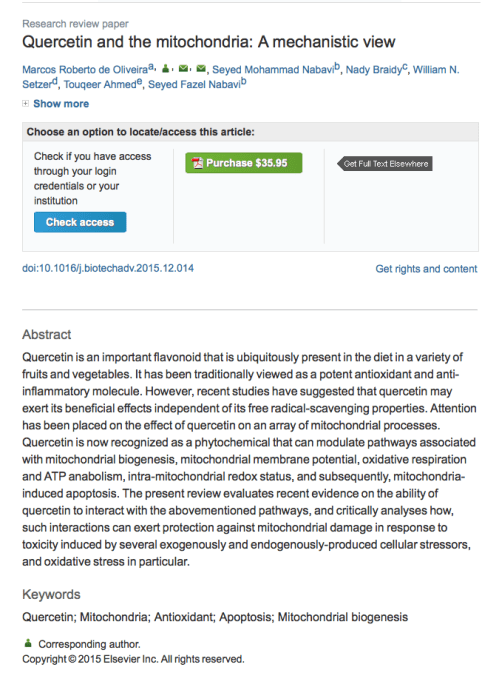
A lot of research on berries over the past few years has emphasized their antioxidant potential. There is a lot more to berries than simply antioxidant activity, and this abstract hints that one of the most abundant flavonoids in Alaska berries especially lingonberries, does a lot more. Mitochondria are the powerhouses of cells. Respiration and energy production occur in these organelles. Quercetin apparently has a huge influence on activity in this part of the cell. Go lingonberries! Check out the entire article although you will have to find a library with free copies to this journal. A single article is expensive.

QUERCETIN

How to study plant roots!

This is an interesting article about excavating roots to show their growth. The plants are apples and raspberries. We have done root excavations at Hort UAF, and it is a pain in the backside! This excavation is extraordinary!  Root excavations

Processing and phenolic compounds in honey berry

The aim of the study was to evaluate different methods used for the preparation of powders from blue honeysuckle (Lonicera caerulea L. var. kamtschatica) cv. ‘Wojtek’, and the effects of these methods on chemical composition and antioxidant activity of lyophilized powders and pomace. The analyzed samples were evaluated for their basic chemical composition (dry weight, pH, total acidity, sugars (glucose, fructose and sucrose), and antioxidant capacity (FRAP, ABTS). Polyphenolic compounds were identified and quantified by UPLC-PDA-MS/MS. Thirty eight polyphenolic compounds, including eight phenolic acids, eight anthocyanins, five flavan-3-ols, twelve flavonols and five flavones were identified in blue honeysuckle products. The highest content of bioactive compounds was detected in juice pressed from peels, as compared with fresh berries and other products. Moreover, crushed berries were found to be a better material for obtaining dried product than intact fruit. Jan OszmiańskiAneta Wojdyło, and Sabina Lachowicz. 2015. LWT- Food Science and Technology. 2015. Effect of dried powder preparation process on polyphenolic content and antioxidant activity of blue honeysuckle fruits (Lonicera caerulea L. var. kamtschatica) Available Online: Abstract

Anybody for a pi pie?

This certainly would be a fun way to serve berry pie! Pi Pie

Berry Cultivation In Norway

This is a short presentation from http://www.bioforsk.no that shows some interesting berry research with cloudberry (Rubus chamaemorus) , crowberry (Empetrum nigrum),  and lingonberry (Vaccinium vitis-idaea)  Berry Cultivation Norway

Salmonberries

Salmon berries anyone?  Salmonberries

Acai Berries

I was seeing and hearing a lot about Acai berries recently, they are considered, I guess, one of the superfoods. For example there is info about them on the WebMed: Acai Berries. I was wondering what kind of berries are they and can they be grown here, in Alaska?