
Monthly Archives: October 2015

Berry Picking in Finland

Today I thought about my attitude towards berry picking when I was a kid. Me, my brother and my parents used to go berry picking together a lot. Blueberries, raspberries, cloudberries… I think it’s funny how me and my brother were talked into berry picking: we were promised to get a burger and fries from our little local grill after a long day in the forest. Today I wouldn’t enjoy that burger as much as I enjoy fresh berries picked up with my own hands from the pretty forests in Finland! Now that is the real reward after roaming a long day in the woods!- Sofia H.
Blueberries and Soils

Soil pH wrong for blueberries? Blueberries like acidic soils and it’s unlikely that your garden naturally has the perfect condition.  The Alaskan Berries website has a soil recipe geared towards Alaskan soils.  It also has helpful hints for growing other berries. Soils and Blueberries

Plants and Pollinators

This presentation on pollination effectively illustrates the relationship between flowers and their pollinators.  It contains striking photos of pollinating insects and birds and is told from the perspective of an entomologist.  The photos of pollinating bees and bats are particularly dramatic.  Plants and Pollinators

Great Recipe Book

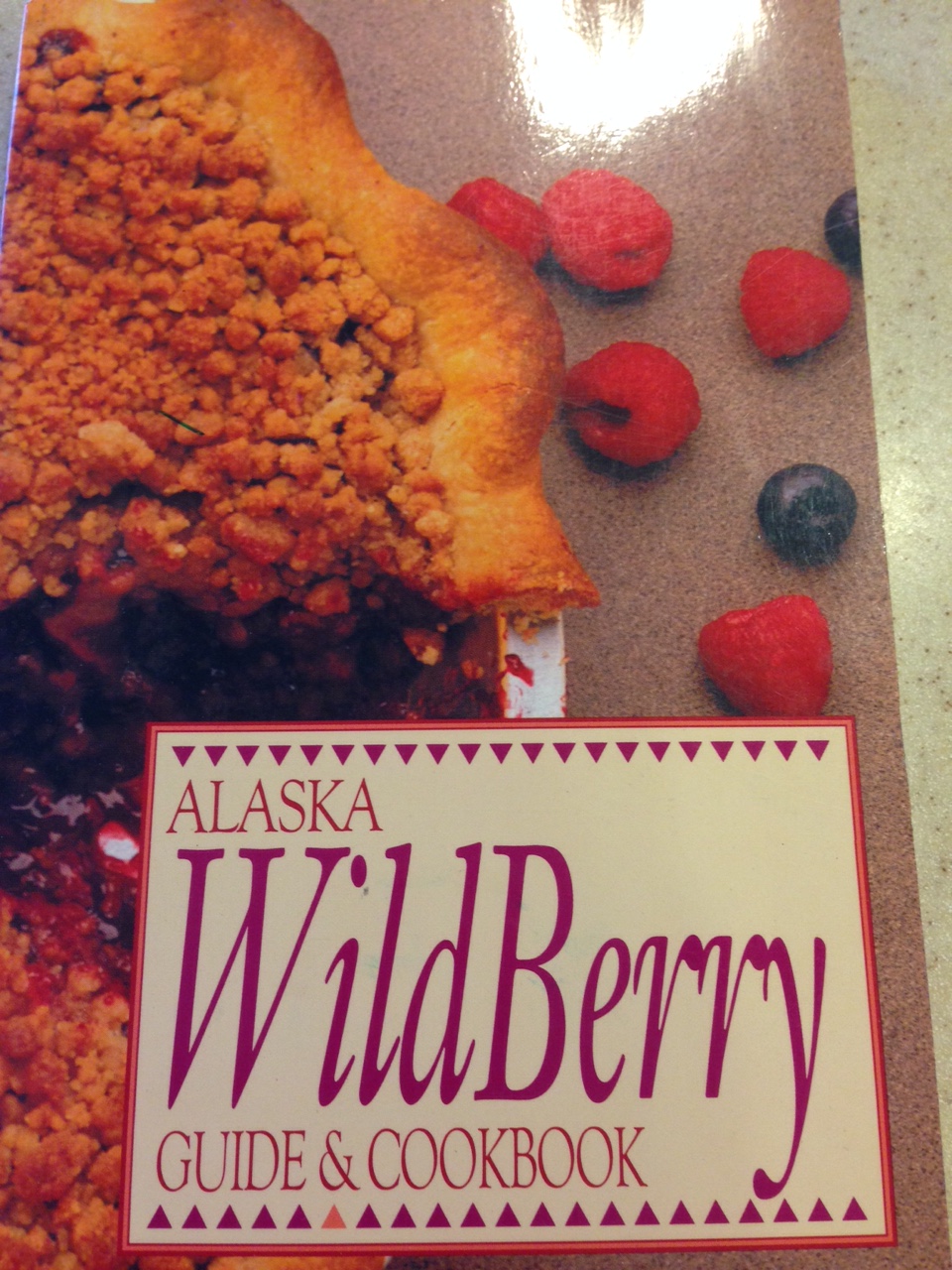
I found this gem on Amazon through a used book seller. It is an older book (original date of publication is 1982, but it was reprinted in 1990). It has a nice variety of color photos of Alaska berries and then the rest of the book is a cookbook that goes beyond the traditional use of berries as a dessert. They have meat dishes with berries, beverages, baked goods, and of course desserts. It has sections at the end about drying and freezing berries. There is no author listed on this book, but it berrycookis published by Alaska Northwest Publishing. berrycook2

Making Mead with Wild Berries

Inspired by whoever posted the wine recipe last week, here is a mead recipe.  Being a homebrewer, this recipe excited me.  I would try and use some local fireweed honey, and adjust berry proportions according to what I had picked.  It’s quite a large amount of berries, and may take me quite awhile to save that much… but it makes a lot of mead with a high alcohol content.  Having friends chip in with the berries and sharing the mead co-op style is the way to go 😉  First link is a recipe, the second is a video on the mead. The recipe. 

Link to a video

Gall roses

Below is a link to an entry about gall roses.  I couldn’t post photos here. 

Can you get hips from gall roses?

Haskap or honeyberry or blue honeysuckle?

This circumpolar plant has one scientific name, Lonicera caerulea, but as common names go, there are several things to call this hardy shrub that bears tasty blue fruit. According to University of Saskatchewan, the breakdown of common names is as follows:

Haskap – for L. caerulea of Japanese descent. There are several iterations of this name, including Hascap and Haskapa. One account attributes the name Haskap as being a modification of hashikahpu, the Japanese word for the fruits.

Blue honeysuckle – translation of the Russian name for L. caerulea. Russian varieties tend to flower earlier than Japanese varieties.

Honeyberry – a name coined by Jim Gilbert of One Green Earth nursery in Oregon.

This website (haskapa.com) has the most complete origin information that I have seen so far, as well as this write-up from Dr. Bob Bors at University of Saskatchewan.

Haskap plants – how many do you need for pollination?

Haskaps (AKA honeyberries) are hardy plants with delicious fruit – all Alaskan’s should be growing these plants in their garden!

Most haskap varieties are considered self-incompatible, meaning more than one plant is necessary to get substantial fruit set. But it is not just a simple math equation. Certain varieties are too similar genetically and will not be able to pollinate one another. And certain varieties bloom early or late, so one must consider bloom time of specific varieties.

So how many do you need? According to the University of Saskatchewan, leaders in haskap breeding for commercial and garden applications, one pollinating plant is needed for every five plants. Other sources claim planting a pollinator plant for every 2-4 plants is adequate, while others advocate planting 2 or more varieties in the same plot. As you can see, there is some disagreement in this area, but the common thread is that more than one variety is necessary to get productive fruit set! This is a true case of more is better, and isn’t it nice to be able to justify those extra berry shrubs in your cart? And of course, insects are necessary in this process to get pollen between plants.

Learn more about haskap pollination here:

University of Saskatchewan haskap page-see the table at the bottom of the page with variety compatibility information

Honeyberry USA

Picking Cloudberries in Estonia

Here’s a short blog about cloudberry picking and recipes from Estonia. Cloudberries and cheese- looks good!  Cloudberries in Estonia

Arctic Berry Harvesting- Churchill, Canada

This site lists the common berries found in and around Churchill,Canada and great information about the berries, photos,  and personal harvesting reports, as well as tidbits about wildlife and birds in the area. Churchill, Canada Berries. It includes kinnikinnick, wild blueberries, bunchberries, cloudberries, bog cranberries, crowberries, gooseberries, raspberries, lingonberries and highbush cranberries.

Trailside Foraging, Pollutants

I live in Anchorage and am an avid user of the urban trail system. On my bike commutes, I often see people foraging for large quantities of berries and leafy greens in close proximity to busy roadways. I might steal a berry every now and then, but I have always been wary of collecting in mass from areas that might be concentrating heavy metals.

I’ve had many an urban forager share their tactics to avoid concentrated chemicals: stay 52 feet from the roadway! Leaves are safe but roots are not!

A student project at Bangor University found heavy metals in roadside blackberries to be “well below any dangerous intake levels.” The University of Minnesota Extension names lead as a soil contaminant of concern, but refrains from being alarmist:

“Studies have shown that lead does not readily accumulate in the fruiting parts of vegetable and fruit crops (e.g., corn, beans, squash, tomatoes, strawberries, apples). Higher concentrations are more likely to be found in leafy vegetables (e.g., lettuce) and on the surface of root crops (e.g., carrots).”

Even in soils where lead exceeds safe concentrations, the greatest risk appears to be in consuming actual soil on the plant. Washing thoroughly is sound practice. It is also good to remember how lucky we are here to live in urban settings so close to wilderness. These natural areas will still be my foraging location of choice.

Spruce Root Berry Baskets

I once took an introductory workshop with Sitka artist Teri Rofkar on spruce root basket weaving. Tlingit basket weaving has persisted for over 6,000 years and many of these basket types were traditionally put to use while berry gathering. Many of the beautiful baskets that Teri brought to showcase were well stained with berry juice.

On her website, Teri says that “harvesting the raw materials to create the basketry is more labor intensive than weaving and in the case of large baskets can take years to collect before the weaving can begin.”

I do not doubt that for a second. Once the long surface roots are collected, roasted and whipped through a forked stick to remove the outer bark, they must be split multiple times and sorted for curvature. I tried my hand at this and decided it was not my calling. I could barely get a root evenly split in half. A skilled weaver can split a root into quarters, and then split those quarters in half!

Highbush Cranberries

Did you know there are several species of high bush cranberries? Viburnum edule is the native species found in Alaska but V. trilobum is the native species found in the other areas of Canada and the Lower 48. Viburnum opulus has been imported from Europe and is sold as an ornamental. This article from “Mother Earth News” offers some methods of identification, Viburnums

Hugelkultur for Alaska?

I really want to try this, we have old piles of trees that are burn piles now. Just think how interesting it would be to use those logs and brush for hugelkultur!

Hugelcultur

Insect identification resources

Being able to identify common insects in your berry stand will help you understand the relationships between plants and insects to help you become a better manager. A majority of the insects encountered in wild and cultivated berry stands play a beneficial role, such as pollinators or predators of potential pests, but some may be pests that decrease yields. Below are some resources that growers can consult as a starting point to learning more about insects in Alaska.

Books:

Insects of South-central Alaska by Dominique Collet. Although the title professes a focus on south-central Alaska, most species described can be found throughout the state. Excellent photos and descriptions make this a useful guide for the amateur through professional.

Agencies:

Cooperative Extension Service – Integrated Pest Management program. Have you collected an insect that you suspect is a pest? You can contact your local IPM technician for assistance identifying the insect and to provide you with management information. If you live in an area without a local Cooperative Extension Office and are good with a camera you can submit photos and information through the digital portal and be connected with the nearest IPM technician. Through the Extension IPM website you can also search available publications, such as Beneficial Insects and Spiders of Alaska.

US Forest Service – Forest Health Protection Program. Their website has resources about forest pests, some of which cross-over to berry plants.

Websites:

UAF Museum of the North – Entomology Collection. Learn more about the variety of insects that have been documented in Alaska. This website, and the searchable ARCTOS database, is most useful if you already know a bit about the insect in question and you are just checking to confirm its existence in Alaska. You can also look through all the insect records in ARCTOS that have pictures in the record.

Alaska Entomological Society – Are you REALLY interested in Alaska’s insects? You may want to consider joining this society to support further investigation and awareness of Alaska’s insects.

Berries Northwest – Although not Alaska specific, this site could be an excellent first step to diagnosing an insect or pest problem. You can search by crop or pest, then look through descriptions and management options.

Vattlingon or “Water lingonberries”

“Vattlingon” is a very simple method for preservation of lingonberries – simply fill a jar with washed lingonberries, then poor clean water over the berries and store them  for  several months in the fridge or cellar. According to Hank Shaw of Honest-food.net: “The effect is to mellow the extreme tartness and tannins in fresh cranberries, leaving them pleasantly acidic and slightly sweet.” Naturally occuring benzoic acid in the lingonberries is a preservative that allows one to store in this manner without adding salt or other preservatives to the mix. How do you get clean water? Simply boil your tap water then allow it to cool before pouring over the berries.

How will you use the lingonberries after they have been stored? A traditional use is to serve a small dish (think shot-glass size) of vattlingon as dessert during the Christmas season. Whipped cream and sugar can be added if it is available, but is not always necessary because the water presercation has mellowed the acidity and added a slight sweetness. Another important use is to consume the liquid in the jar. Or you can get more creative and incorporate vattlingon into main courses, such as these recipes for spring salmon and grouse with rosemary and cranberries.

Raspberry FLowering and Pollinators

Here is a short summary of USDA ARS research on raspberry flowering and pollination. The bottom line? Know your origin! Wild raspberries are partly or wholly self incompatible; cultivated ones are self fertile and even may have apomictic seeds meaning pollination is not even necessary.Raspberry Pollination

Climate Change Effects on Tribal Resources

Climate change is something that has influenced and will continue to affect berry habitats. The EPA has a slide deck regarding an Alaska project on this subject, “Impacts of Climate Change on Health Benefits of a Tribal Alaskan Resource: Integrating Traditional Ecological Knowledge With Risk Assessment Through Local Monitoring.” Some great photos and interesting survey results: Climate Change Effects in Alaska

Mycorrhizal Associations and Phosphorus

If you think Mycorrhizae are pretty neat, there are lots of YouTube videos that will tell you more about this subject. Here is one on enhanced phosphorous uptake: Mycorrhizal associations and phosphorus

Pests, diseases, IPM

Whether your berry’s pests are plant, insect or disease – these folks can help you out:IPM . You’re also helping others by using this site as you can help identify trends in Alaska.